
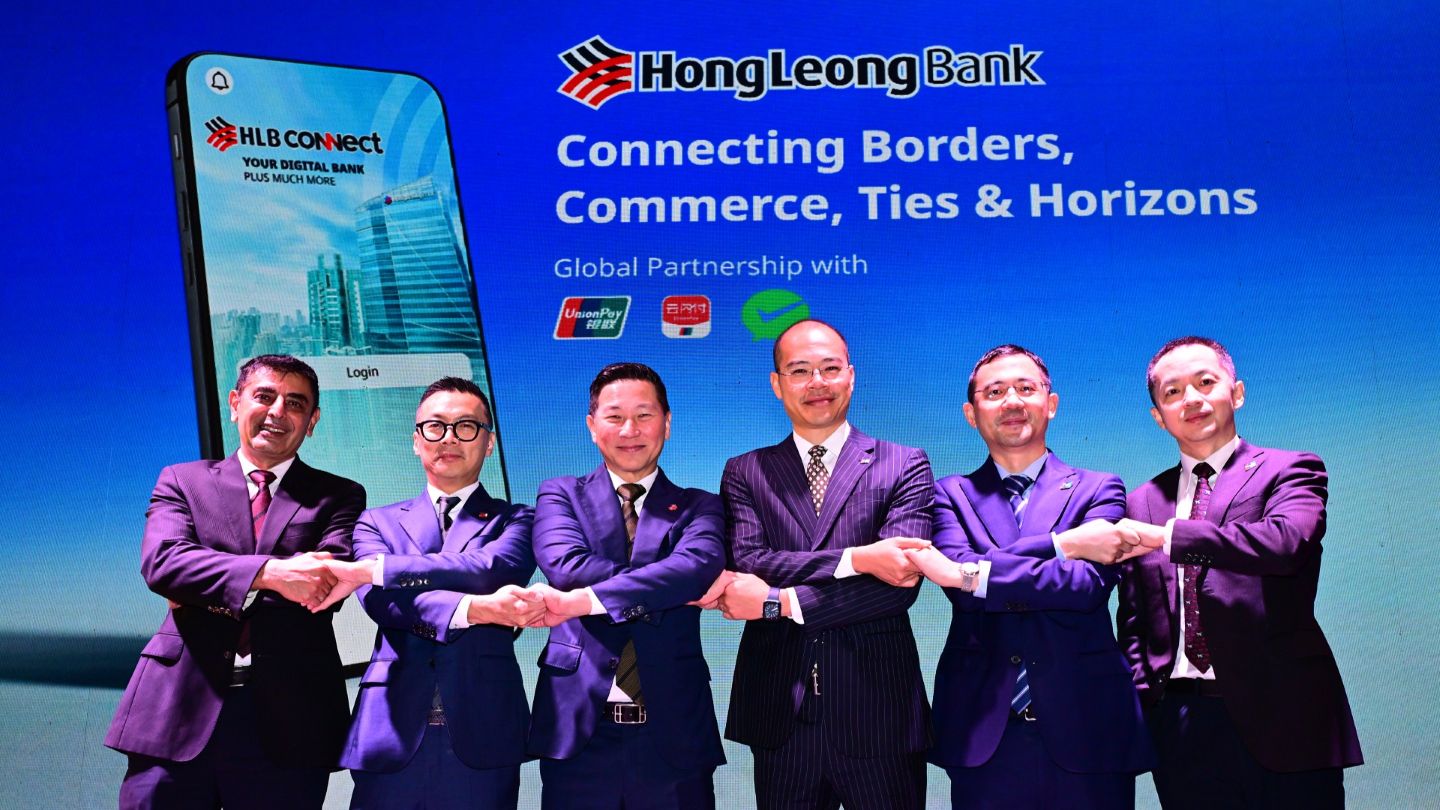
Hong Leong Bank (HLB) has partnered with UnionPay International (UPI) to broaden cross-border payment options for customers travelling or doing business outside Malaysia.
The agreement gives HLB customers access to UPI’s network integrated with Weixin Pay.
Go deeper with GlobalData


Access deeper industry intelligence
Experience unmatched clarity with a single platform that combines unique data, AI, and human expertise.
The agreement will allow users make payments at more than 120 million merchants in mainland China, as well as participating outlets in Hong Kong SAR, Macao SAR, and Thailand, the bank said in a statement.
Customers can use HLB QR Pay through the HLB Connect app to pay at merchants, including department stores and local food stalls.
The feature also works with the multi-currency functions of HLB’s Pay&Save Account. Customers can secure exchange rates in advance and avoid using third-party apps or adding funds to external wallets.
HLB’s wider overseas payment offering also includes scanning participating merchant QR codes, showing an in-app QR code for merchants to scan, and linking eligible HLB cards to Chinese super-apps such as Weixin Pay.
Other options include direct debit and credit card payments, as well as mobile wallet services including Apple Pay, Samsung Pay, and Google Pay.
HLB group managing director and CEO Kevin Lam said:”At its core, a cross-border payment only works when trust exists on both sides of the transaction where customers know with certainty that their payment will go through, and merchants trust that they will receive it.
“Partnering with UPI and tapping into their vast international network, including Weixin Pay, allows us to deliver that scale and certainty globally.”
UPI vice president Carlson Licommented: “Our partnership with HLB demonstrates how interoperability can connect different payment ecosystems to deliver practical benefits for customers, where HLB customers can now access a wider merchant network directly from their banking app, making cross-border payments more convenient and supporting commerce between markets.”