
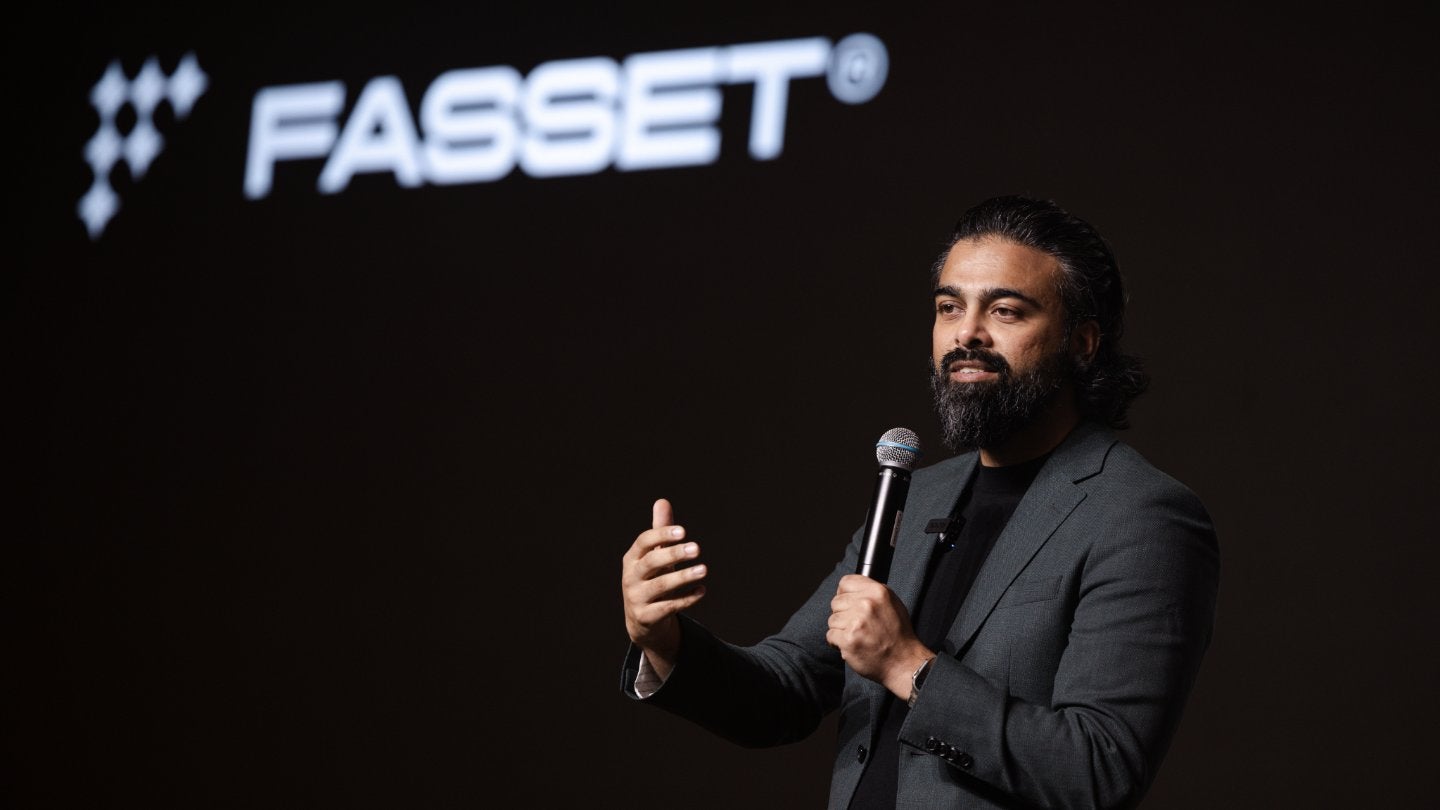
Fasset, a stablecoin-powered neobank, has achieved unicorn status following its latest funding round led by Japan’s SBI Group.
The platform raised $68m in Series C to hit $1bn valuation.
Go deeper with GlobalData


Access deeper industry intelligence
Experience unmatched clarity with a single platform that combines unique data, AI, and human expertise.
The funding follows Fasset’s $51m Series B announced in May. The company said Speedinvest joined the cap table in that round alongside strategic investors.
Overall, Fasset has raised $119m this year.
SBI Holdings chairman, president and CEO, and representative director Yoshitaka Kitao said: “Fasset’s vision of a world in which money moves across borders as easily as information does point in the same direction as the on-chain economic zone that the SBI Group seeks to realise through digital finance.
“Fasset has already built a strong business foundation and a robust regulatory framework in a number of emerging markets with significant long-term growth potential. It was therefore in the conviction that Fasset can serve as an important financial bridge connecting Japan with high-growth markets around the world that we decided to lead this round.”
Founded in 2019, Fasset allows customers receive, hold, move, spend, and invest across currencies, markets, and asset classes.
The company said it processes “more than” $40bn in annualised transaction volume. It reported more than 3 million wallets across 125 countries and more than 1,000 enterprise customers.
Fasset will use Series C proceeds will be used to scale Own Network, its regulated financial network that connects banks, telecommunications firms, and payment and liquidity providers. The company said the network is designed to support settlement across international markets.
The company also plans to increase investment in agentic AI-enabled systems. These systems will support corridor banking, stablecoin settlement, and tokenized asset infrastructure.
Fasset co-founder and CEO Mohammad Raafi Hossain said: “We are investing deeper into the stack, from licences in emerging markets to enabling agentic payments, to rebuild the way we do banking from the ground up.”