National Payments Corporation of India (NPCI), which oversees retail payments and settlement systems in India, has partnered with HSBC India and JP Morgan Payments to enable foreign exchange (FX) settlement for cross-border transactions.
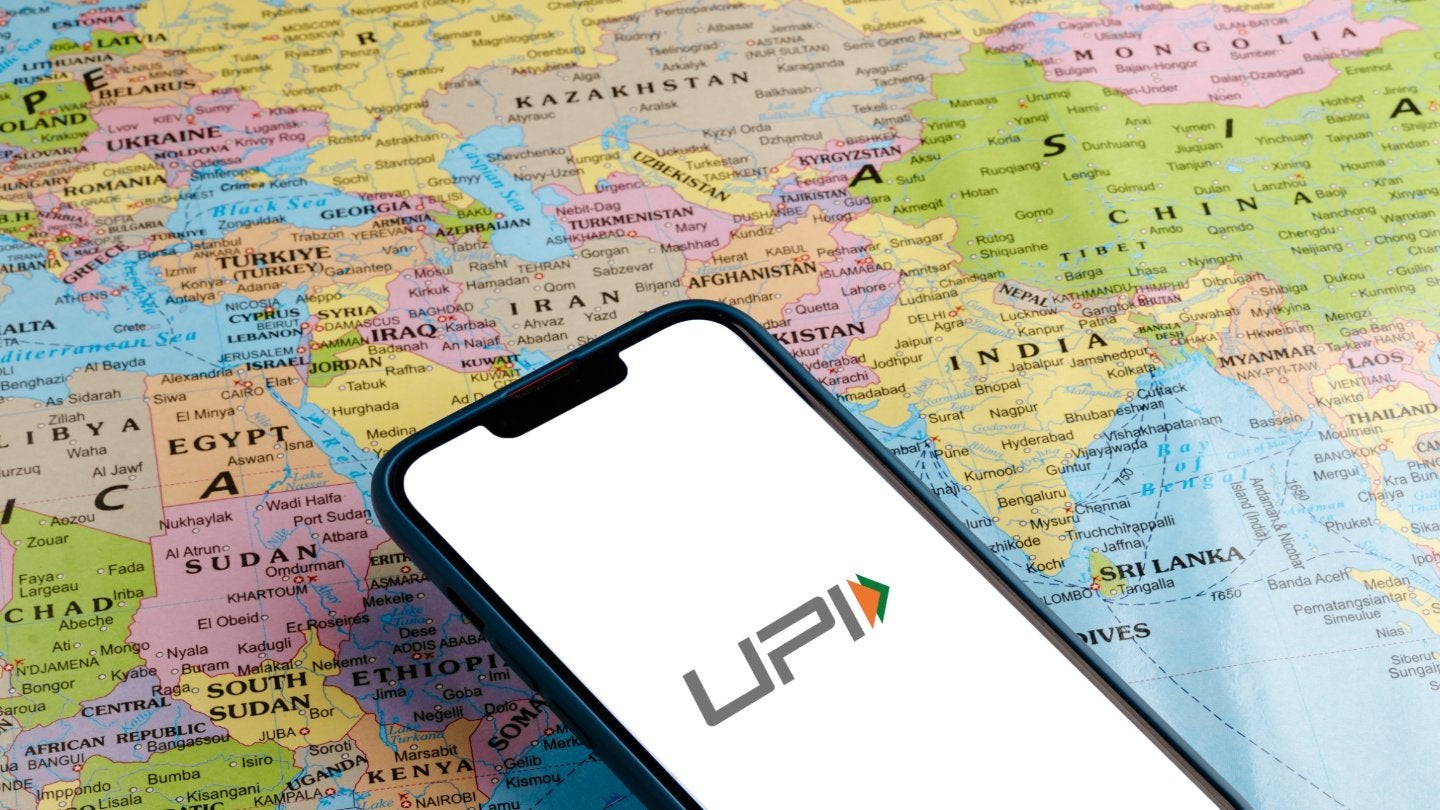
The collaboration will support real-time currency conversion and settlement for international payments made through the Unified Payments Interface (UPI), India’s instant account-to-account payment system.
Go deeper with GlobalData


Access deeper industry intelligence
Experience unmatched clarity with a single platform that combines unique data, AI, and human expertise.
“The solution will allow international merchants and financial institutions to receive funds in their local currencies while simplifying the end-to-end settlement process,” Business Standard quoted the organisation as saying in a statement.
Under the arrangement, HSBC India and JP Morgan Payments will act as banking partners. They will provide real-time FX rates through direct application programming interface (API) integration. This will allow customers to view the exact INR amount payable at the point of transaction.
In a separate statement, JP Morgan Payments said the collaboration brings clients across India “faster, more transparent international payments”.
JP Morgan Payments India head Guhaprasath Rajagopal said: “This collaboration reduces friction in cross-border payments and connects clients to UPI’s expanding reach, while pairing it with our real-time FX capabilities and API-based integration.
“We’re focused on helping clients deliver better customer experiences with greater transparency, scale and control across currencies and corridors.”
UPI is currently live in nine international markets, including Singapore, the United Arab Emirates, Nepal, Bhutan, Mauritius, France, Sri Lanka, Cambodia and Qatar.
NPCI is also extending UPI’s presence to additional countries through NPCI International, its wholly owned subsidiary.
On cross-border performance, UPI’s international transaction volume crossed one million for the first time in FY26.