
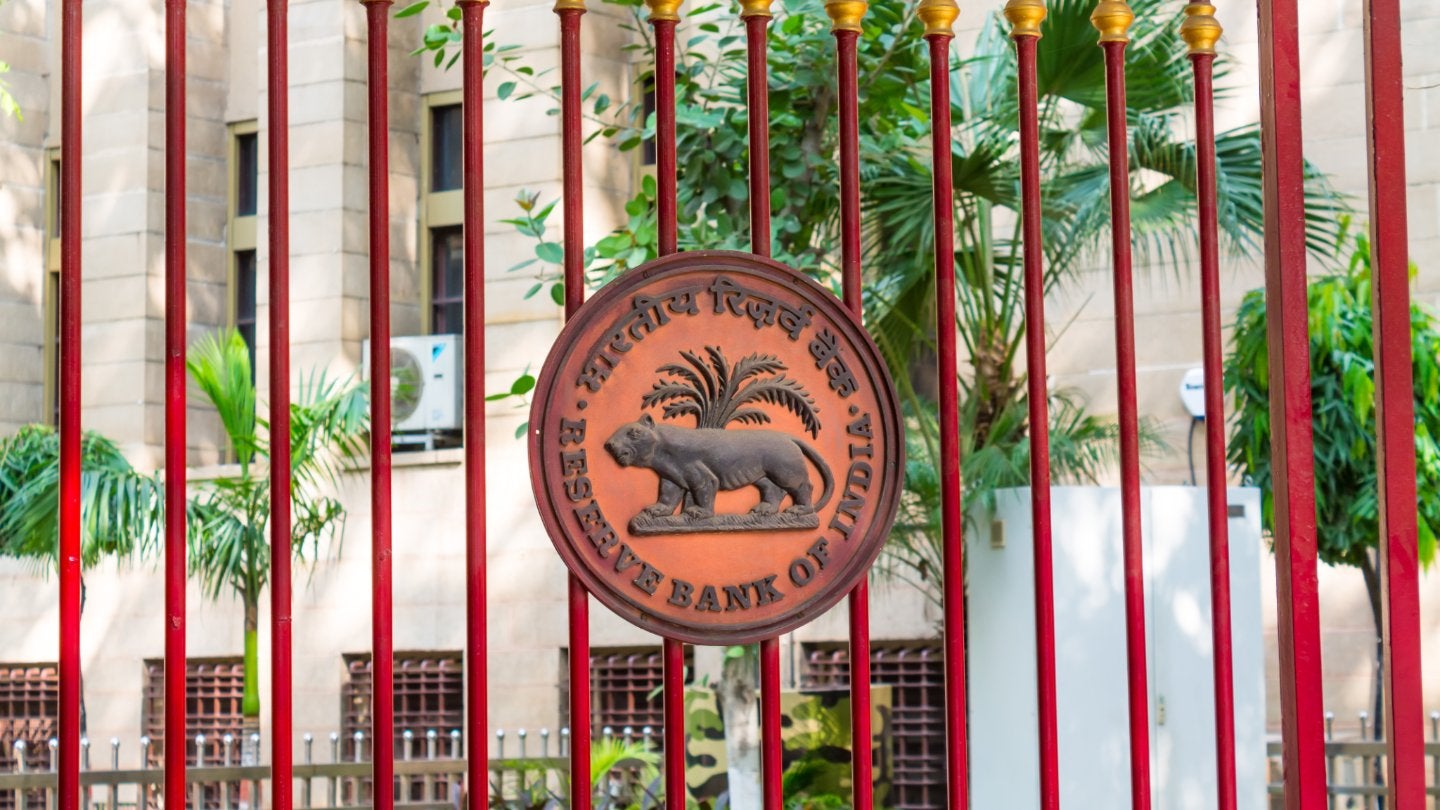
The Reserve Bank of India (RBI), the central bank of the country, is in discussions with its peers in four to five countries to build cross-border transaction rails for central bank digital currency (CBDC) transactions.
According to a Business Standard report, the proposed framework would cover both wholesale and retail CBDC use cases. The report added, citing sources aware of the development, that RBI is holding the discussions with central banks in Asia and advanced European economies.
Go deeper with GlobalData


Access deeper industry intelligence
Experience unmatched clarity with a single platform that combines unique data, AI, and human expertise.
The work could lower remittance costs and reduce the checks currently applied at multiple stages of cross-border transactions. The sources told the publication that the move could make transfers more affordable and faster, which is relevant for India given its remittance inflows.
India is among the leading recipients of inward remittances. Key remittance inflows come from the US, followed by the UAE, the UK, Saudi Arabia and Singapore.
RBI data shows Indians living abroad sent over $107bn so far in 2025-26 (FY26).
Although RBI has been piloting CBDC applications in both wholesale and retail segments, it has not moved to a full-scale rollout.
Sources told Business Standard the central bank is taking a cautious approach and will continue working with other countries on cross-border CBDC rails.
RBI started a pilot for the wholesale CBDC in November 2022 and launched the retail CBDC pilot in December 2022. The central bank has said retail CBDC transactions have crossed 120 million.
It also said progress on the retail pilot is broadly in line with expectations and that ongoing work includes programmability, coordination with state and central governments, specialised products for banks, and enabling cross-border payments.
Around 8 million users are using the CBDC.
A CBDC is a digital form of legal tender issued by a central bank. Similar to sovereign paper currency, it is exchangeable on a par with an existing currency and is accepted as a medium of payment, legal tender, and a store of value.
CBDCs appear as liabilities on a central bank’s balance sheet.
Earlier this year, RBI urged the government to seek a formal agreement among BRICS members to link their CBDCs.
The report said the initiative is aimed at simplifying cross-border payments for trade and tourism within the bloc.