
The 2020s so far have been defined by disruption and upheaval.
The international rules-based order established amidst the ruins of World War Two is being tested, forcing many industries to rethink established practices. Supply chains are being re-routed to avoid an increasingly complicated maze of tariffs and trade barriers. Europe meanwhile has been forced to rethink keeping the lights on following Russia’s invasion of Ukraine.
Financial services too, are not immune to this. In bank boardrooms across the world, established norms are being reconsidered as bankers look to manage the thing they hate the most – uncertainty.
Go deeper with GlobalData


Access deeper industry intelligence
Experience unmatched clarity with a single platform that combines unique data, AI, and human expertise.
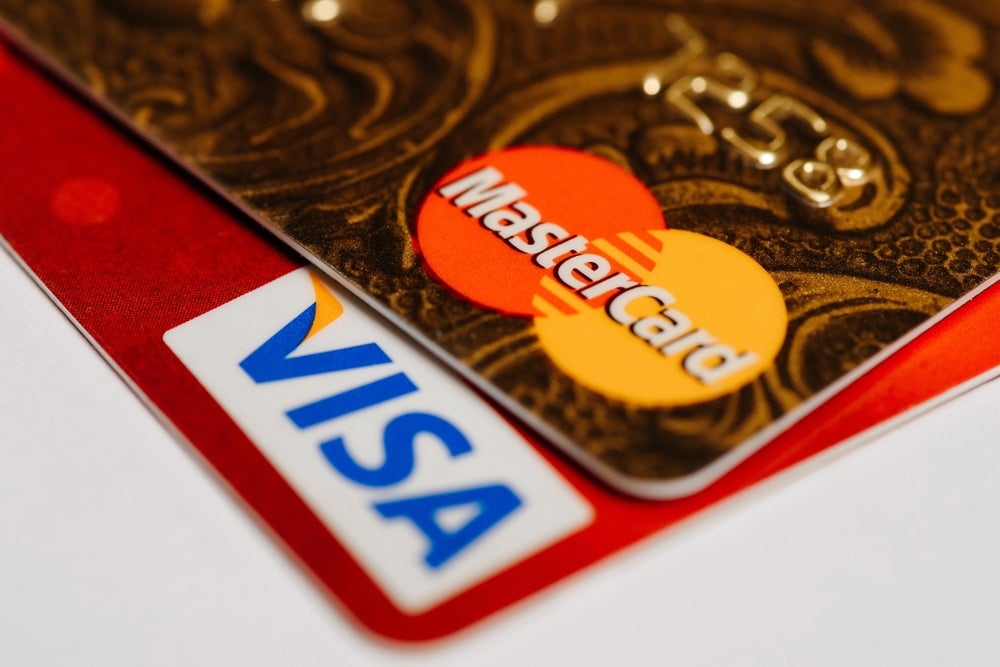
One such rethink currently doing the rounds in London is the question of whether Britain should establish its own, national rival to Mastercard and Visa. Why? To give the UK’s payment system some insurance and independence in the face of a seemingly capricious US administration.
America’s Trump card
Recent decades have seen instant, always on payments become the global norm. My own business Caxton has been part of this growth over the last twenty years.
While there are thousands of front-end businesses across the world finding niches within the payments ecosystem, it remains the case that the backend infrastructure that keeps the whole system going remains squarely rooted in the US. Two companies in the US in fact, Visa and Mastercard. Between them these two giants power a huge proportion of global payments. In the UK alone, 95% of all payments undertaken are underpinned by Visa or Mastercard.
Until now, concerns about this have been niche. With an increasingly bombastic administration throwing norms to the wind however and who clearly isn’t afraid to leverage whatever advantages the US might have in pursuit of US interests.
It’s for this reason that a coterie of senior bankers from the UK last month met to discuss the feasibility of the UK establishing its own, sovereign alternative to Visa or Mastercard. This, it is hoped, would mitigate the risk of the US turning off the payments taps to apply diplomatic pressure, and would create a rival payments powerhouse here in Great Britain.
Time will tell where this initiative leads. But how feasible is it?
Painful payments
Having built a business in payments, I can say that trying to build a British Visa from scratch would present incredible challenges not just technical, but also for British businesses and consumers.
On the technical side, Visa and Mastercard are woven into the fabric of payments globally and have built a system that works beautifully and securely for billions. Building this has taken decades and switching now would inevitably be painful and would lead to risk and inconvenience for millions.
Businesses in the UK are already under pressure from an increasingly complex tapestry of regulation and shouldering a tax burden that is reaching historic highs. Asking them to reconfigure their entire payments system would be a further challenge that many would rather do without. And if indeed businesses opted to continue working with the existing payments infrastructure which is recognised, adopted and embedded globally, what then? Either businesses would need to be coerced or, the British payments system which would cost billions to deliver, would suffer from lack of uptake.
There is precedent here too. Japan has tried to build its own native payments system. While it has had some success the reality remains that, outside of Japan few have heard of it, never minded opted to use it as an alternative to Visa or Mastercard.
For consumers too, while greater competition in the market can drive innovation, it can also cause confusion as brands and services proliferate. In an age where financial institutions and consumers are already playing catch-up with emergent threats like ‘deep-fakes’, this confusion could play nicely into the hands of fraudsters.
A pyrrhic victory
Stepping away from Mastercard and Visa is riddled with difficulty and for many consumers and businesses the question will be, why fix it if it’s not broken?
The question is then, what if the bankers plotting a sovereign payments system are correct, and it is broken? Would Visa and Mastercard really turn off the taps at the behest of the White House. Three months into 2026 and betting against even the most wild scenario in geopolitics seems optimistic but, what we can say is that for the US, switching off global payments would be a pyrrhic victory to say the least.
For the US, switching off payments would strengthen the case for a UK sovereign payments system, and for other payments rivals globally. As the US struggles against China to retain its position as the global hegemon and the reserve currency of choice, such a move could be fatal in the long-term.
For Visa and Mastercard themselves meanwhile, every single day that passed with global payments turned off would cost millions. Huge sums of money would be lost to these businesses – and to the US treasury in tax receipts – and it wouldn’t take long for these economic pressures to begin weighing heavily on any decision to turn off payments.
The idea of payments being turned off is alarming but, to me at least, it seems unrealistic. Ultimately, voluntarily shutting down billions of payments and transactions would hit these businesses’ own revenues and precipitate the rise of global competitors.
Rupert Lee-Browne, CEO and founder, Caxton