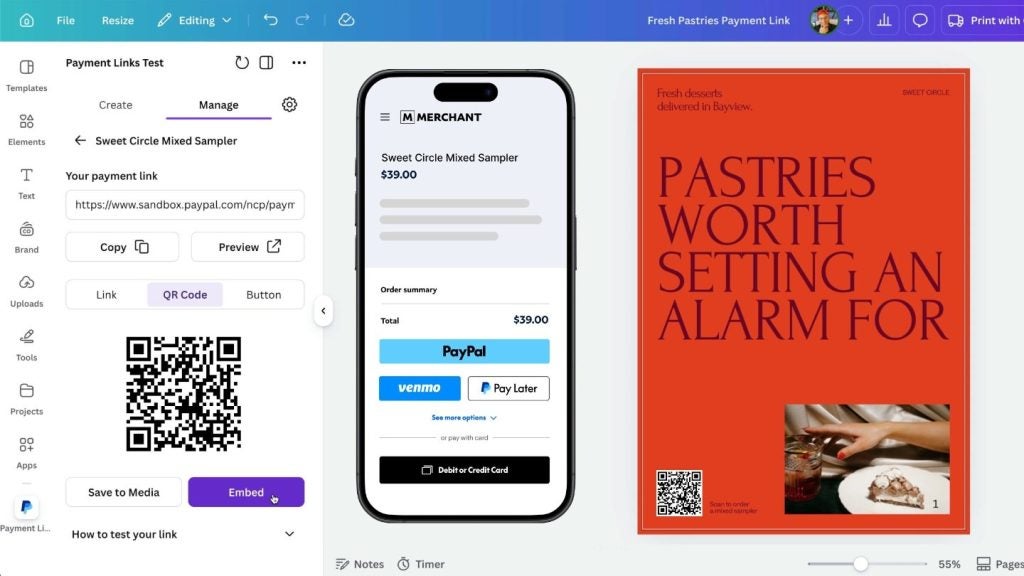

Stablecoin issuer Tether has invested in SQRIL, a payments technology startup that connects banks, ewallets and fintech applications to real-time QR code payment networks.
The size of the investment was not revealed.

Access deeper industry intelligence
Experience unmatched clarity with a single platform that combines unique data, AI, and human expertise.
SQRIL plans to use the fresh capital to expedite the development of infrastructure that supports payments powered by stablecoins.
The company offers an API-based switch that links into banking networks and digital finance platforms.
SQRIL’s technology connects with banks such as Barclays and Bank of America via configurable APIs, and also plugs into fintech services including Venmo, Revolut and Cash App to extend digital payment options.
At present, SQRIL’s API enables customers to pay domestic QR codes in the Philippines, Vietnam and Indonesia, and supports bank transfers in Malaysia and Thailand.
The firm expects to add more markets in Asia, Africa and Latin America in the first quarter.
Explaining the model, SQRIL founder and CEO Malcolm Weed said that “any traditional bank such as Barclays or Bank of America, or neobanks such as Venmo, Revolut or Cash app can integrate with our APIs and allow their user base to scan & pay local QR codes across Asia, Africa and Latam.
“Users would pay with their home currency, and the merchant in the foreign country would receive their local currency. SQRIL would handle the forex and local payout in the destination currency.”
Weed added: “I believe we are at the early stages of instant payment interoperability between banks, ewallets and merchants of different countries, and SQRIL plans to be an important part of that infrastructure.
“With the rise of national QR code schemes, stablecoins and the global movement of people, there needs to be a better way to pay across borders.”
Tether pointed to the dominance of scan-to-pay QR code systems across a number of Asian markets in recent years, noting that this method has become the primary way to pay and continues to grow.
It also highlighted rising adoption of real-time national QR code schemes in emerging regions such as Latin America and Africa for everyday transactions.
Commenting on SQRIL’s ambitions, Weed said: “We are aiming to be the world’s QR code infrastructure leader, especially as it relates to emerging markets.”