
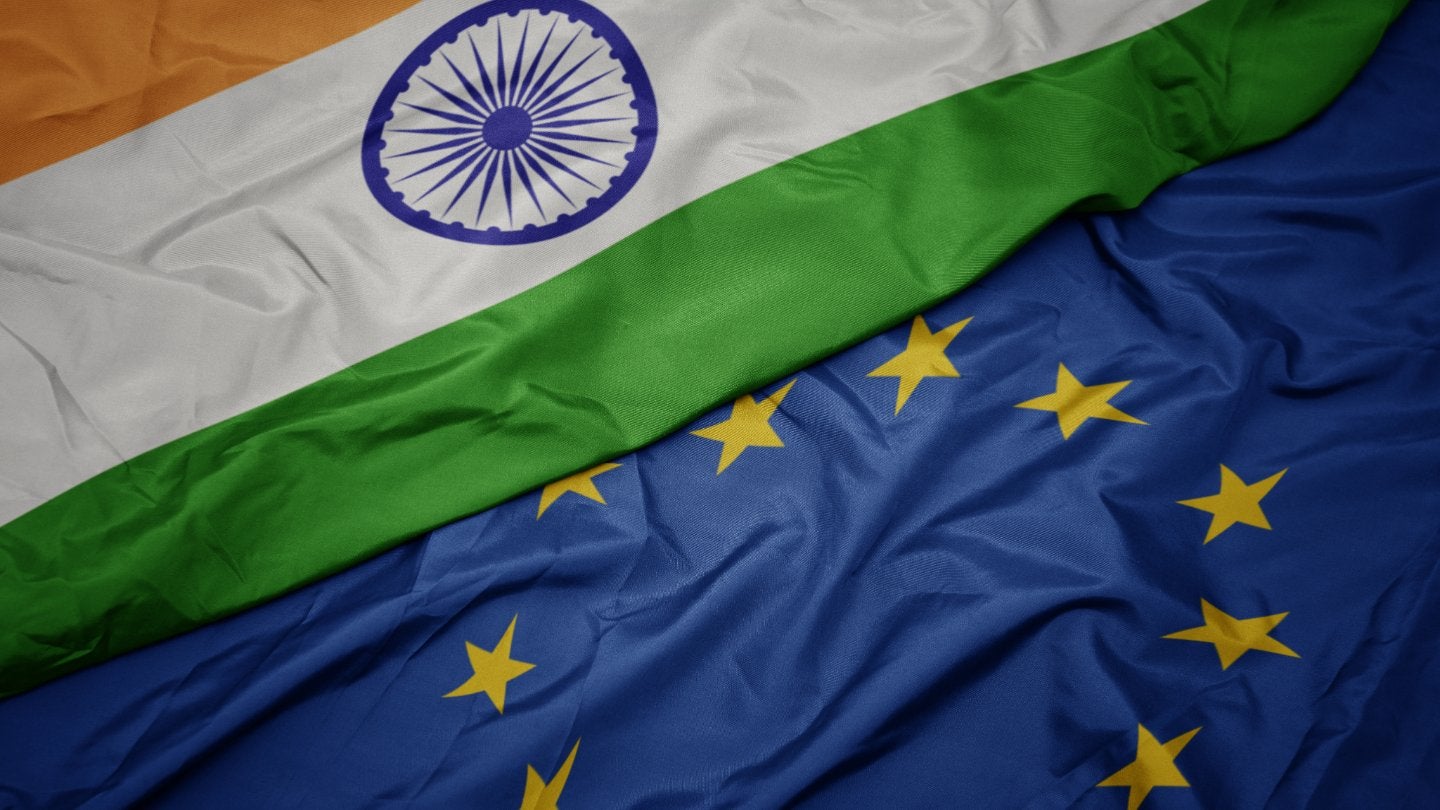
India and the European Union (EU) have completed negotiations on financial services under the India-EU Free Trade Agreement (FTA). The two sides closed the chapter in the latest negotiating round.
The outcome sets out an institutional and regulatory framework to support bilateral cooperation. It also aims to improve market access and enable closer integration between the two financial systems.
Go deeper with GlobalData


Access deeper industry intelligence
Experience unmatched clarity with a single platform that combines unique data, AI, and human expertise.
The talks conclude against a backdrop of strong services trade.
Total services trade between India and the EU stood at around $83bn in 2024.
India exported about $700m in financial services to the EU in 2024 and imported around $600m in financial services from the bloc in the same year.
The financial services annex includes 16 articles. The parties say it goes beyond standard General Agreement on Trade in Services (GATS) commitments.

US Tariffs are shifting - will you react or anticipate?
Don’t let policy changes catch you off guard. Stay proactive with real-time data and expert analysis.
By GlobalDataIndia and the EU committed to cooperate on electronic payments and real-time transaction infrastructure. The text covers interoperability and the interlinking of payment systems.
It also targets improvements in cross-border payments for use cases such as remittances, merchant payments, and other transfers.
The agreement also includes commitments on fintech cooperation. India and the EU plan to support fintech initiatives and work together on “innovative” financial services. The areas include supervisory technology (SupTech), regulatory technology (RegTech) and central bank digital currency (CBDC).
The annex includes provisions intended to address discriminatory treatment in credit assessment and broader market treatment. The stated aim is to ensure parity with domestic institutions in the EU market and support market access for Indian financial institutions and other financial service suppliers.
The schedules of specific commitments cover market access and national treatment in banking, insurance, and other financial services segments. India’s offers reference recent policy settings, including 100% foreign direct investment (FDI) in insurance and an FDI limit of 74% in banking.
On branch expansion, the framework includes a licencing approach that allows up to 15 bank branches to be established over a four-year period, compared with a previously offered limit of 12 branches under GATS-based commitments.
The negotiating summary also includes current market presence. Three Indian banks operate in the EU- State Bank of India, Bank of Baroda, and Bank of India.
Together, they have five branches. State Bank of India also maintains a representative office in the EU.
On the EU side, five banks operate in India with 33 branches. In addition, 17 EU banks maintain representative offices in India.
“Overall, the conclusion of negotiations on the India-EU Financial Services Annex underscores both governments’ commitment to deepening economic ties and harnessing mutual opportunities in the rapidly evolving financial services landscape. The agreement is forward-looking, balanced and designed to provide enhanced market access, regulatory clarity, and cooperative frameworks that will benefit financial institutions and service providers from both countries,” India’s Ministry of Finance said in a statement.