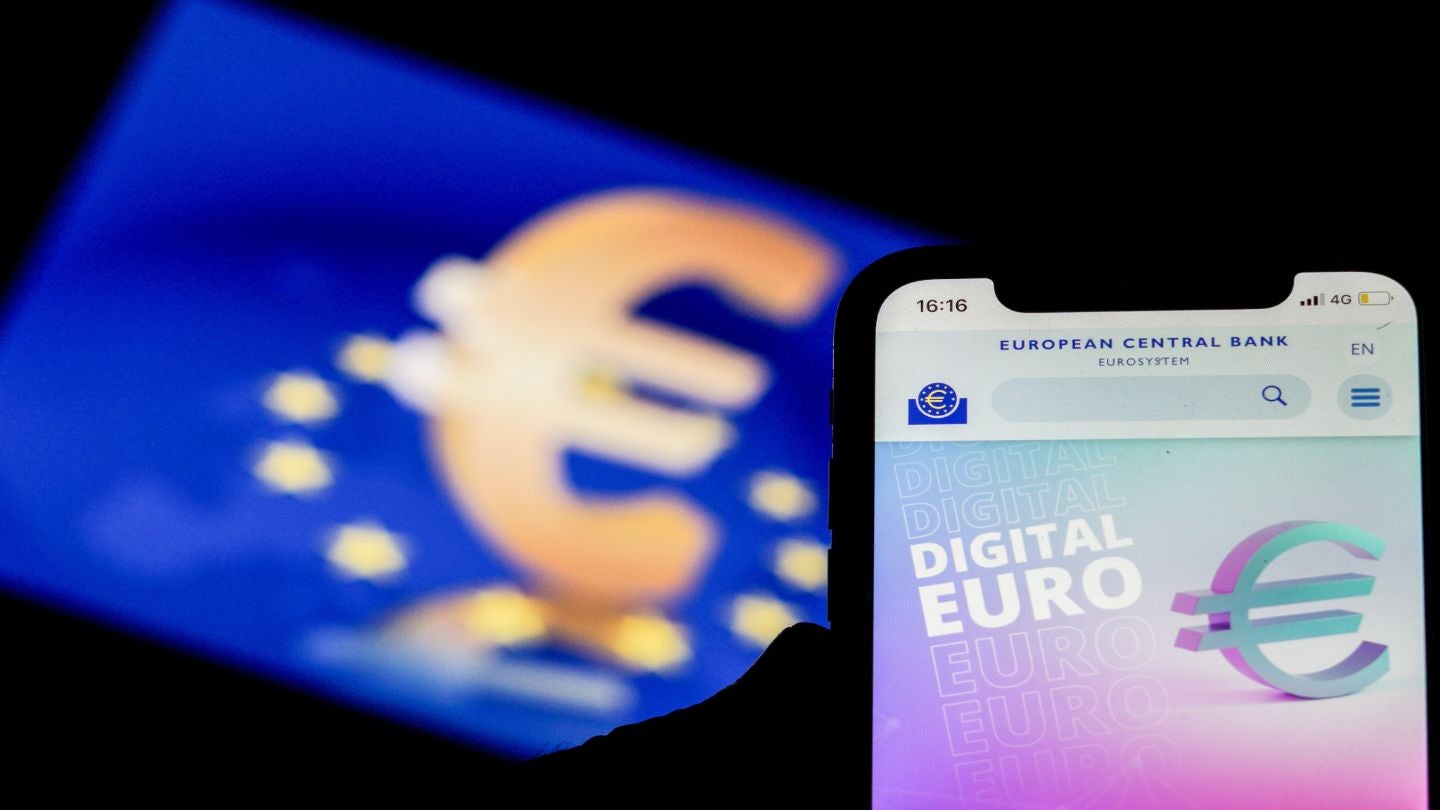
EU lawmakers have backed plans to enter negotiations on legislation that would establish a digital euro, as the bloc seeks to reduce reliance on US-based card networks and mobile wallets.
In a statement issued on 9 July, the European Parliament said 416 lawmakers voted in favour, 169 against and 22 abstained. The vote allows the file to move to the next stage of the legislative process.
Go deeper with GlobalData


Access deeper industry intelligence
Experience unmatched clarity with a single platform that combines unique data, AI, and human expertise.
The move followed challenges from the PfE, ECR and ESN political groups to an earlier decision by Parliament’s Economic and Monetary Affairs Committee to open interinstitutional talks.
The contested parts of the package relate to setting up a digital euro and to rules for how payment service providers in EU member states outside the euro area could provide digital euro services.
A third file in the single currency package, covering the legal tender of euro banknotes and coins, was not contested. Negotiations on that measure can also proceed.
Rapporteur Fernando Navarrete Rojas (EPP, ES) will lead Parliament’s negotiating team.
A first round of talks with the Irish Presidency of the Council, representing member states, is scheduled to take place “shortly”, the statement added.
Under the proposal, a digital euro would have the same value as cash and banknotes. It would be a new electronic form of money issued by the European Central Bank (ECB).
Digital euros could be used for in-store payments, online purchases and person-to-person transfers. Users could access the service through channels including a card, an app or a phone.
EU officials have said the digital euro would protect privacy by safeguarding user identity. The plans also include an offline mode intended to offer confidentiality similar to cash.
The proposals would allow banks and payment service providers in EU member states outside the euro area to distribute the digital euro. They will also include holding limits for individuals as a financial stability safeguard.
The ECB plans a potential full launch of digital euro in 2029.