By Philippe David, CEO of Welcome Real-time
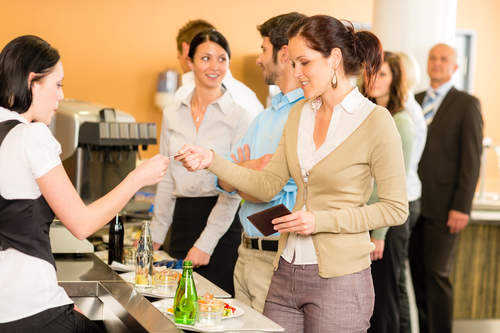
We’ve all been there before: patiently waiting at the checkout for our payment card transaction to be authorized. It may only take a few seconds in most cases, but it certainly feels like longer. Whilst it’s true that some retailers encourage their staff to try and fill this ‘dead time’ by engaging with small talk, it’s generally not the case.
Go deeper with GlobalData

Access deeper industry intelligence
Experience unmatched clarity with a single platform that combines unique data, AI, and human expertise.
At a glance it may seem that the solution lies in reducing the time taken to authorize the payment, with NFC and similar technologies quickly coming to mind. And whilst faster payments are desirable for some retail sectors such as fast food, the real issue across most retail sectors is not the time it takes to authorize a payment but more the failure to leverage on this time to engage with customers and create a positive and lasting impression.
We only have to look at similar initiatives in other fields to see the benefits and ease at which this ‘dead time’ can be harnessed. Many of us can still vividly remember the days when ATM machines simply asked us to ‘wait’ instead of displaying product related advertising, and let’s not forget the often strange ‘hold music’ that we had to endure before companies started leveraging on this time to provide valuable product and service related advice.
The retail experience may have changed significantly in the last few decades, with many retailers employing increasingly sophisticated marketing and advertising tactics to entice us into their stores and purchase their products, but the last few seconds of the retail experience has remained largely untouched with the focus remaining solely on the act of payment rather than encouraging us to already start planning our next visit to the store.
Whilst the act of payment is an essential closing part of any retail experience, it doesn’t need to be our final memory as we’re walking out of the door. Receiving a targeted reward or message thanking us and encouraging us to visit again soon is a much more positive end to the experience rather than reminding us how much we just spent.
But the true potential lies beyond simply being rewarded. The last few seconds of the retail experience provide the perfect opportunity to elicit valuable feedback regarding our level of satisfaction, encourage us to signup to receive communication and additional member benefits, or even share our experience by recommending the retailer to our friends via Facebook or other social media channels.
Many of the ‘new-age’ payment service providers such as Square, LevelUp and PayPal are already making inroads by offering payment services, which provide much more than just payments. However, the reality remains that the ten’s of millions of traditional POS terminals that are already deployed and used by retailers across the globe are not going to disappear or be replaced in the near future, as such the key to transforming the last few seconds of the retail experience lies more in enriching the current infrastructure rather than seeking to replace it. After all, whilst many retailers liked NFC in principle, when it came to purchasing new hardware to accept NFC payments, any initial interest soon fizzled out.
In the same way that the Smartphone has become less about talking and more about the apps, the traditional POS terminal can be easily enriched and transformed to provide a more meaningful and gratifying experience for both the customer and the retailer.