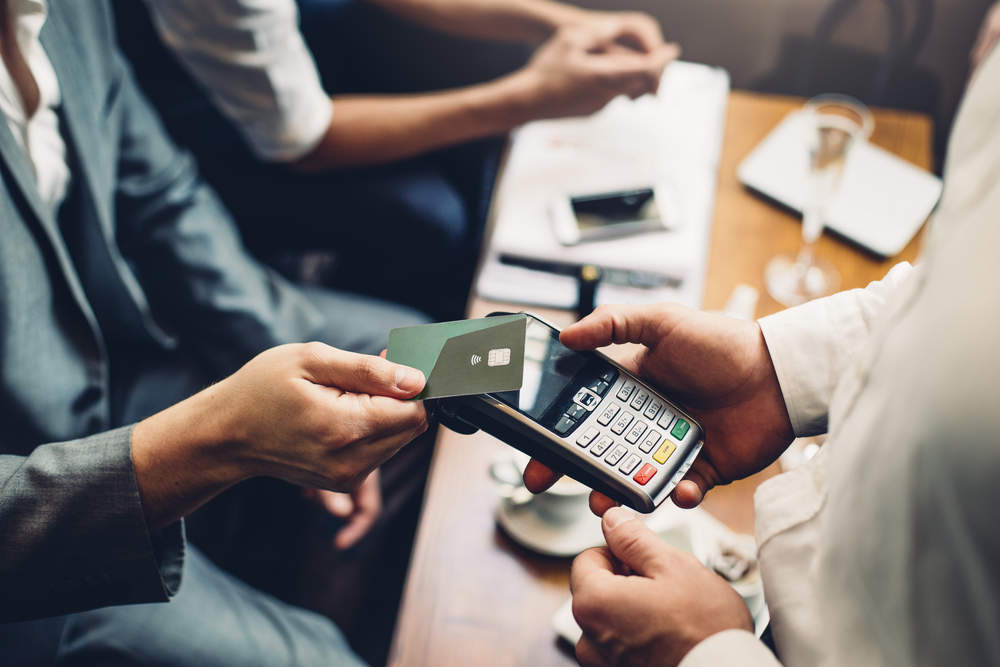
In a time where ‘tap and go’ payments are normality in everyday lives it seems inevitable that we are moving towards a cashless society. But is this really the best idea? Evie Rusman looks at the dangers of contactless payments and speaks to industry experts
Nowadays, it seems almost old-fashioned to pay with cash while the chances of a restaurant or shop not having a contactless card reader are fairly slim. This has led to a culture where ‘tapping’ has consumed almost every aspect of our lives.
Go deeper with GlobalData

Access deeper industry intelligence
Experience unmatched clarity with a single platform that combines unique data, AI, and human expertise.
In 2018, ‘tap and go’ card payments overtook chip and PIN in shops for the first time. Data published by Worldpay showed that last June 51% of all card payments in shops were by contactless cards, up from 50% in May.
The efficiency and speediness of these payments means there have been huge advancements in terms of technology. However there is a worry that overspending has increased, particularly amongst millennials.
A recent study, published by The Claude Littler Business School at the University of West London, showed that one in five Londoners under the age of 45 are struggling to pay their debts because of the ease of contactless payments.
The study also found that more than one in 10 people considered reverting to cash in an attempt to control their spending.
Speaking to EPI, Stuart Carmichael, Chief Executive of Debt Support Trust, explains how young people are more vulnerable to overspending.
He says: “I would say with any form of technology that’s new, your innovators are typically going to be the younger audience. I definitely think they are more vulnerable. Contactless is a natural way of life for millennials.”
Alternatively, Sue Anderson, Head of Media at StepChange Debt Charity, tells EPI that young people are not necessarily in debt as a result of contactless payments.
She says: “Digital payments are more popular among younger people, and younger people are increasingly experiencing problem debt, but that doesn’t necessarily imply a causal link.
“Other drivers of debt among young people are the high costs they face (on housing, for example) relative to their incomes, and their greater likelihood of being in insecure employment, which can leave them particularly vulnerable to debt caused by changes in circumstances.”
The dangers
So, what are the dangers surrounding contactless payments? With ‘easy tapping’ comes the idea that people are not keeping track of where there money is going.
Carmichael says: “Contactless payments are great for society and great for technology, however, it is going to create an environment where you are able to purchase faster and purchase more with a tap.
“That tap of a card actually is worth money and there is that underlying feeling people are unaware of how much they are spending. There needs to me more robust thought processes to ensure that people who are using contactless have the money and affordability to come out the other side.
“From a usability stand-point for everybody it’s not necessarily going to be the greatest thing. It is going to cause problems and you can see it already.”
Agreeing with Carmichael, Anderson highlights that even though electronic payments have provided major benefits, there are also a number of negatives.
She says: “Electronic payments are a massive convenience, and many of us enjoy being able to transact with the minimum of ‘friction’. This has obvious benefits, but a negative side effect of convenience is that it can be very easy to end up overspending on a cumulative basis.”
What are the solutions?
There are a number of ways people can overcome bad spending habits. Anderson recommends budgeting and making a note of one’s finances.
She says: “One of the most important pieces of advice we give to clients is the important of making a budget, and tracking your spending to help you stick to it.
“For some people, using cash can be a helpful way of doing this, but there are also helpful apps that can help you take control of tracking your spending if you do use electronic and contactless payments.”
Carmichael explains how easy it is for people to overestimate the amount of money they have in their bank accounts and suggests money management apps could be a way forward.
He says: “Money management is important. There are many of us that’ll look at a bank balance at the end of the month and think how did that happen? You have got so many payments coming out each month, coupled with using your card for cash.
“At one minute you can have several hundred pounds in your bank account and the next minute you look you are down to £100 and then you’re into your overdraft.
“We always tell people it is worthwhile looking at these money management apps or even writing down all transactions to accurately forecast spending. This means that people are more aware of the actual amount of money they have each month to spend.”
According to an Independent Study, Brits will spend nearly £150,000 ($187,000) on ‘impulse buys’ within their lifetime. As a result, this can cause overspending.
“It is impulse purchases we have to be wary of like buying a bottle of wine on a Friday night. It’s those purchases that take us from being in a relatively healthy place to needing a bit of help. It’s about money management and making sure we are focused on our finances as well as understanding your actual position,” adds Carmichael.
Heading towards a cashless society
For a number of years now there has been speculation about eventually moving towards a cashless society in the UK. With this comes worry in terms of access as there would be an increased dependency on the internet as well as a higher chance of cyber security threats.
Carmichael says: “Certainly contactless is great for technology, but in the wider scheme of things if you’ve got money problems it is not good. Contactless means more people are likely to pay and worry about it later. That’s how you get into unauthorised overdraft fees and how you get into breaching your credit limits.
“It also means having extra charges, missed payments and unauthorised courses. So certainly, we would see cashless as a bad thing for those who do not have savings to rely on but rely on their overdraft each month. At that point, unless money is managed contactless or cashless may not be the best thing for society.”
It is hard to know if the UK will definitely move towards a cashless society but all the signs seem to point towards it. If this is the case, millennials may struggle to remain afloat when it comes to managing their finances. This leaves the question: is cashless really the best thing for society?