
Retirement planning used to follow a predictable, linear script: join a company, climb the ladder for thirty years, and exit with a gold watch and a well-funded pension. That script was written for a world of industrial stability and institutional loyalty.
Over the last decade, the twin forces of technological acceleration (most notably and recently, AI) and global market disruptions have effectively shredded the traditional employment contract. High-performing professionals no longer view their careers as a straight line; instead, they see a series of high-impact, three-to-five-year sprints punctuated by pivots, layoffs, or “in-stasis” periods.
While careers have gone digital and modular, retirement infrastructure remains stubbornly analogue and institutional. This fundamental mismatch is driving a quiet revolution among retirement investors. They are moving away from employer-centric retirement models and anchoring their wealth in “second” accounts; accounts that are rapidly becoming their primary strategy. In this new era, “second” no longer means “secondary.”
The portability gap: A failure of financial plumbing
In the payments sector, the concept of “friction” is a cardinal sin. The retirement sector remains the final frontier of administrative gridlock. This has created a “Portability Gap.”
In a volatile labour market, a typical high-performer might have a three-year to four-year run at a firm. When that role is restructured or they move to a competitor, their 401(k) contributions stop. Then comes the friction: the “waiting period” at the new firm (periods that can range from a few months to longer depending on plan design), the confusing paperwork of a rollover, and the reliance on physical checks being mailed between institutions.
On paper, 401(k)s are portable. In practice, the “plumbing” of moving these funds is so cumbersome that many investors default to inaction. Their capital sits in “zombie accounts,” neglected, poorly allocated, and drained by legacy fees. The real risk isn’t just market volatility; it’s being out of the market or stuck in cash during a rollover gap.
This inherent friction is further illustrated by the fact that most 401(k) Administrators do not permit in-service rollovers. An in-service rollover allows investors to move their Qualified assets into a retirement account of their choosing while they are still with their current employer. This restriction effectively binds investors to the limited asset selection of their employer plan, with no way out unless they leave their current firm or turn 59 ½.
In an economy where market cycles move at hyperspeed, treating retirement assets like a locked box is dangerous. When administrative friction leaves capital stale during major shifts, missing even a few weeks of participation can derail a thirty-year plan. These accounts, intended to be passive but resilient, often become stagnant precisely when market volatility requires a dynamic response. Investors are realizing that they cannot afford to have their primary nest egg held hostage by slow-moving institutional plumbing.
From employer-led to individual-centric
Because of this friction, investors are shifting their centre of gravity. They are no longer treating the employer-sponsored 401(k) as the hub around which their retirement plans are affixed. They are anchoring their strategy in personally controlled accounts: traditional IRAs, solo 401(k)s for consultants, and self-directed IRAs (SDIRAs).
These are no longer side accounts. They are the constant across a fragmented career. Employer plans come and go. A personally controlled account is the portable hub that remains under the investor’s control, regardless of their job title.
The strategy has flipped: Investors are treating the employer 401(k) as a contribution channel, while the personal account serves as the strategic engine. They are consolidating legacy 401(k)s into these hubs to maintain a consistent, long-term allocation strategy rather than starting from scratch every time they update their LinkedIn.
The “second sleeve” and diversification 2.0
There is a common misconception that opening a self-directed account, especially one that allows for alternative assets, is “betting the farm.” It is, in reality, an act of sophisticated risk management.
The typical retirement investor is a 40-to-60-year-old professional with high income and advanced education. They aren’t “betting the farm” on crypto or gold; they are applying a “sleeve” strategy. They maintain their core exposure to traditional index funds and ETFs, but they add a secondary sleeve (often 5% to 15% of the portfolio) into assets that move differently than the S&P 500.
By holding digital assets or precious metals inside a tax-advantaged retirement shell, they achieve two things. First, an asymmetric upside by participating in high-growth, emerging asset classes that are often unavailable in restrictive employer plans. Second, a psychological ownership of their portfolio. These assets require more active monitoring, so investors become more engaged with their total portfolio. Counterintuitively, this engagement often leads to better long-term discipline, as the investor feels a sense of agency that a generic target-date fund cannot provide.
A call for systematic evolution
If the era of multi-decade employment is over, the financial and payments ecosystem must evolve to support the “sovereign investor.” The retirement engine needs reshaping in three concrete ways:
- Make Portability Frictionless: The process of rolling over a legacy 401(k) should be as seamless as a peer-to-peer payment. There needs to be better API integration between legacy providers and modern platforms to eliminate “zombie accounts” and the “mailed check” era of retirement.
- Individual-Centric Architecture: Products must be designed where the core retirement engine is controlled by the individual, with employer contributions acting as “plug-ins” rather than the foundation.
- Institutional-Grade Alternatives: Alternatives should no longer be viewed as a “gimmick.” There needs to be robust education and transparent reporting for crypto, real estate, and metals within tax-advantaged accounts, treating them with the same rigor as blue-chip equities.
The future of retirement control
The acceleration of AI and the fragmentation of the workforce aren’t just HR trends; they are financial catalysts. They are forcing a migration toward personal financial sovereignty.
As careers become more modular, the “second” retirement account is poised to become the primary pillar of wealth security for long-term investors. The industry’s job, and specifically the payments and fintech industry’s job, is to make these accounts easier to fund, easier to move, and easier to understand.
The goal is simple: ensure that no matter how often a worker’s job title changes, their trajectory toward retirement remains constant, controlled, and unencumbered by friction.
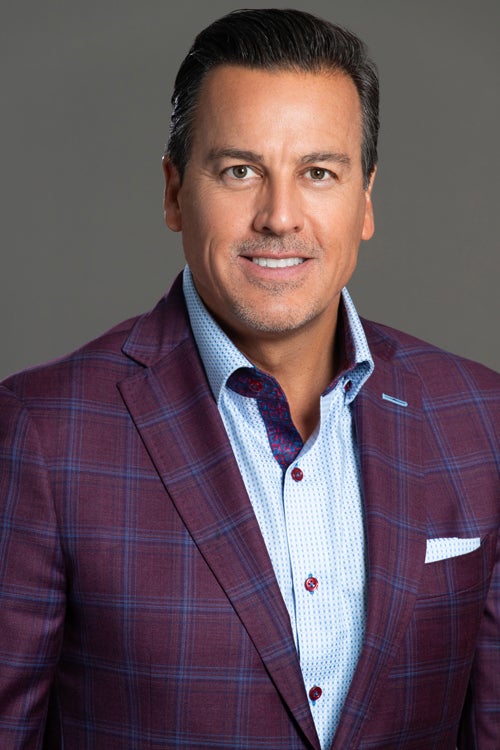
Kevin Maloney, CEO, iTrustCapital
The views expressed are for informational purposes only and should not be construed as investment, tax, or legal advice. Individuals should consult their own professional advisors before making any financial decisions