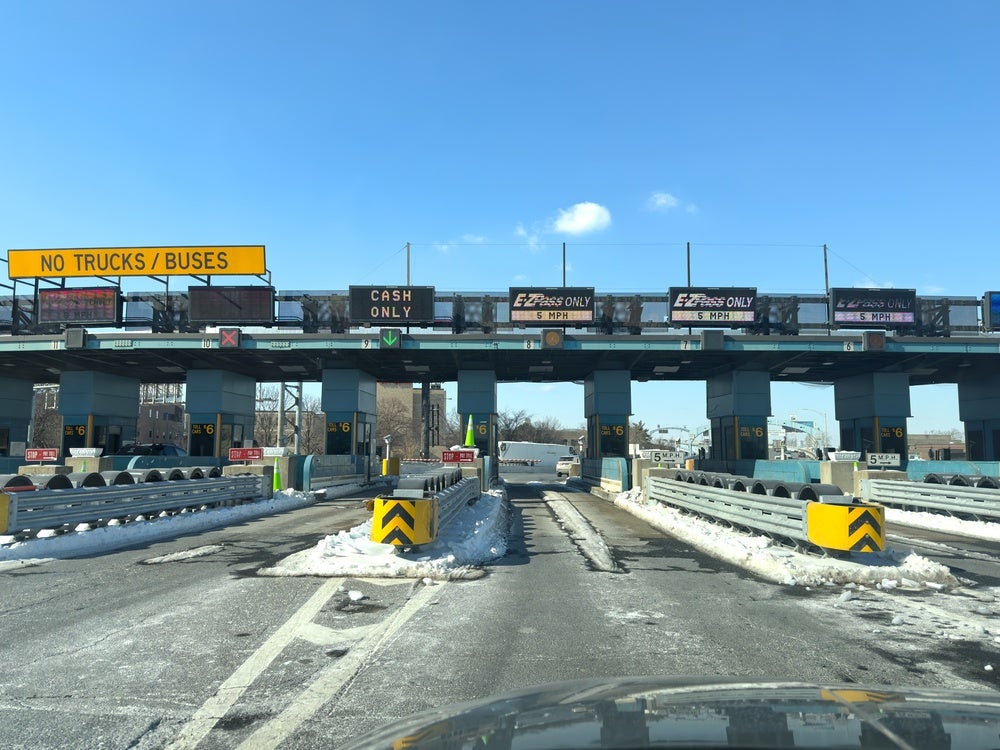
Most of us have received a toll invoice in the mail. We fully intend to pay it, but between finding the invoice, navigating the payment portal and entering the required information, the task gets pushed aside. Days turn into weeks, and before long, a simple toll has become a violation.
Those seemingly small moments of payment friction have enormous consequences. Those small unpaid bills cost US toll agencies an estimated $2.24 billion a year. This is an unintended consequence of cashless tolling. When toll agencies removed the tollbooth transaction and replaced it with a paper bill that arrives days later and a clunky online payment portal, they created an expensive revenue leakage problem.

The response has been strict enforcement: late fees, penalties and holds on vehicle registrations. This isn’t the answer because it doesn’t address the real problem, which is a payment experience so difficult that drivers who are willing and able to pay simply don’t.

Drivers themselves confirm this. Nearly half of those who received a past-due toll violation (49%) said the single thing that would have prevented a past due violation was an easier payment process that was not long or complicated. Currently, off a paper invoice, drivers have to type the printed web address into a browser, then look up the bill with a plate or account number and the invoice number—sometimes behind a login—before they reach a payment screen. It’s no wonder nearly 2 in 5 drivers (39%) report trouble accessing toll agency payment portals.

Everywhere else, paying takes seconds—a tap at the register or a click or two online. Yet paying a toll remains one of the few routine transactions burdened by unnecessary steps. Compared with the seamless payment experiences consumers encounter every day, the process feels needlessly complicated.

From paper bills to digital payments

Fortunately, solving the problem doesn’t require reinventing the proverbial wheel. Sometimes, removing just a few steps can dramatically improve payment completion. Nearly half of drivers (45%) say scanning a QR code to pay a toll invoice is appealing. Printing a personalised QR code on every paper toll invoice allows drivers to scan the code with their phone and pay immediately with a few taps, and without scrambling for an account number or password.

Here’s the catch: QR codes are only as effective as the payment flow behind them. If drivers scan only to land on the same clunky payment portal, the agency gets the same result—abandoned payments. Get the payment experience right, and the payoff is real. When the Transportation Corridor Agencies (TCA) in Orange County, California, put personalised QR codes on invoices and pointed them at a prefilled payment page, payments through the new channel rose 640%.

Expand payment options

Making it easier to reach the payment screen is only half the battle. Once drivers get there, they still need to be able to pay the way they prefer. When the payment method they want to use isn’t accepted, many don’t pay at all. In fact, 30% of drivers who missed a toll invoice payment pointed to the absence of a digital wallet option as the reason.

Drivers expect paying a toll to feel no different than paying for coffee, groceries or online purchases. More than half would be likely to use PayPal (55%) or Apple Pay (50%) if the option existed, with Venmo (33%), Google Pay (32%) and Cash App Pay (30%) close behind.

This tracks a broader shift in where people store their money: more than two-thirds of payment app users (68%) maintain a balance in apps such as Venmo, Cash App and PayPal, and 35% use those balances to pay bills. For toll agencies, this is one more reason to accept digital wallets.

Digitise cash

Cashless tolling has streamlined operations, but it has also created new barriers for millions of cash-preferred consumers. Modernisation doesn’t mean you can’t accommodate cash payers—it means you should digitise cash payments. Some toll agencies are already doing it successfully using personalised QR codes.

Here’s how it works: drivers scan the personalised QR code printed on their toll invoice and are directed to a payment screen already loaded with their invoice details and amount due. They choose from the available payment options, including cards, digital wallets and cash. If they opt to pay with cash, a personalised barcode is generated, which they take to a nearby retailer, such as 7-Eleven or CVS, hand over cash at the register and receive a receipt. The transaction posts back to the toll agency electronically. This serves both the drivers who prefer cash and the ones who depend on it, without asking either to change how they pay.

Beyond tolling

Tolling may be one of the clearest examples of payment friction, but it isn’t unique. Utilities, courts, healthcare providers and tax agencies all face the same challenge: consumers now compare every payment experience to the best ones they have elsewhere. One tap, stored payment credentials and direct payment links have become the standard—not the exception. Organisations that continue treating payments as transactions to process rather than experiences to design will continue chasing payments that could have been completed the first time.

Enforcement will always have a role. But if agencies want to reduce violations, improve collections and better serve their communities, the biggest opportunity isn’t stronger enforcement—it’s a better payment experience.

Lew Gaskell is Director of Tolling at PayNearMe