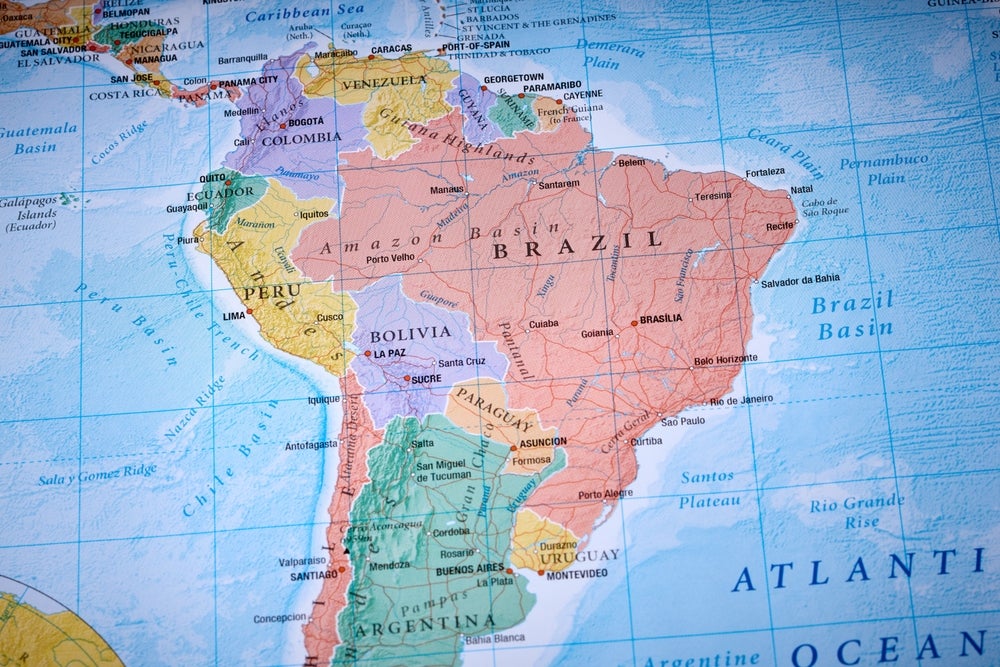
Latin America has emerged as one of the most dynamic and promising regions in the global payments ecosystem. With a population of more than 660 million people and rapidly accelerating digital adoption, Latin America has become a strategic priority for global businesses expanding internationally.
However, while the opportunity is clear, execution remains complex. Latin America is a collection of distinct payments ecosystems, each shaped by its own economic realities, regulatory frameworks, and consumer preferences. Success in the region requires a country-by-country mindset.
Why Latin America is on global expansion roadmaps
Several structural trends are driving Latin America’s rise as a global growth destination.
E-commerce continues to expand at double-digit rates across many markets, fuelled by increased internet access and mobile-first consumer behaviour. At the same time, a growing middle class is gaining purchasing power, while younger, digitally native consumers are accelerating the shift toward online and mobile payments.
This transformation is reflected in the rapid growth of digital payments. Transaction volumes are projected to reach $0.3tn by 2027, growing at over 10% annually since 2022. In e-commerce, the shift has been even more pronounced: digital payments now account for 48% of all online transactions and are projected to account for 66% by 2030.
Financial inclusion is also improving. Millions of consumers are now accessing real-time payment systems and alternative financial services. More than 64% of the region’s population uses mobile internet, and around 60% rely on mobile wallets or payment apps for everyday transactions.
Even in the context of economic volatility, these trends are creating a compelling proposition: a large, fast-evolving market with significant untapped potential. For global merchants, the question is no longer whether to “enter” Latin America, but how to do so effectively.
One region, many payments realities
Despite its regional label, Latin America is far from homogeneous. Payment ecosystems vary significantly from country to country, requiring tailored strategies rather than broad assumptions.
Brazil, for example, has become a global reference point for real-time payments, with Pix transforming everyday transactions. It is now the most widely used payment method in the country, with nearly 170 million users and annual transaction volumes exceeding BRL15tn. Across the region, other markets are advancing similar initiatives to modernise payment infrastructure and reduce reliance on cash, such as CoDi in Mexico.
In contrast, Mexico presents a more hybrid landscape, where cards coexist with cash-based and account-to-account solutions. Chile and Colombia show strong digital adoption but differ in infrastructure maturity and regulatory approaches, while Argentina combines high levels of digital engagement with more economic volatility and tighter controls.
While digital wallets and instant payment systems are expanding quickly, offering new levels of convenience and accessibility, cash remains an important and relevant part of the ecosystem in many countries. As such, cash-based solutions, including vouchers that can be paid in physical locations, continue to play a key role in enabling e-commerce for consumers without access to cards or bank accounts.
The result is a fragmented payments landscape, where consumer preferences and payment behaviours differ significantly across markets – shaping how businesses need to approach payments in the region.
The rise of local payment methods and A2A payments
In Latin America, local payment methods play a central role in driving adoption and conversion. They are not just alternatives – they are often the preferred way to pay. In many cases, they outperform international card schemes in both adoption and transaction success rates.
For account-to-account payments, the region has seen strong domestic development. Pix has famously captured a significant proportion of consumer transactions in Brazil. In Mexico, Sistema de Pagos Electrónicos Interbancarios (SPEI) serves as the backbone for real-time transfers, alongside newer solutions emerging across the region.
Domestic digital wallets and QR-based payments are also playing an increasingly important role. Mexico’s government-backed CoDi platform offers QR-based instant payments with strong institutional support, though consumer adoption has been slower than the explosive growth seen in Brazil, with nearly 30% of Pix transactions initiated by QR codes.
These payment methods are deeply embedded in each country’s financial ecosystem. They reflect how consumers manage liquidity, their trust in financial institutions, and their day-to-day financial habits.
For global businesses, the implication is clear: relying solely on international payment methods can significantly limit market penetration. Enabling locally relevant options is essential not only for accessibility but also for performance.
Operational challenges
In Latin America, each market has its own rules governing payments, from licensing requirements and tax structures to reporting obligations and foreign exchange controls. Settlement timelines can vary, and compliance standards evolve as regulators respond to innovation and economic pressures.
This diversity is reflected across key markets. Brazil has built a strong regulatory framework around instant payments with Pix; Mexico’s fintech law has formalised digital payments and Argentina maintains stricter controls on cross-border transactions. While these frameworks support local market development, they also add operational challenges for businesses operating across multiple countries.
For companies used to more standardised environments, this creates significant operational friction. Processes that are straightforward in one market may require adaptation in another.
Beyond regulation, factors such as currency volatility, reconciliation challenges, and cross-border fund flows add further layers of complexity.
Successfully navigating this landscape requires not only technical capability but also deep local expertise and continuous adaptation.
Value through partnership
Diverse payment ecosystems, varied consumer behaviours and evolving regulatory frameworks make Latin America a challenging region to scale in. Navigating this environment requires more than local adaptations, it requires orchestration.
Businesses need a partner that can unify payments across markets, combining deep local expertise with scalable infrastructure. This means enabling access to locally preferred payment methods, ensuring compliance with country-specific regulations, and simplifying operations through a single, consistent approach.
Juan Franco, CEO at Getnet