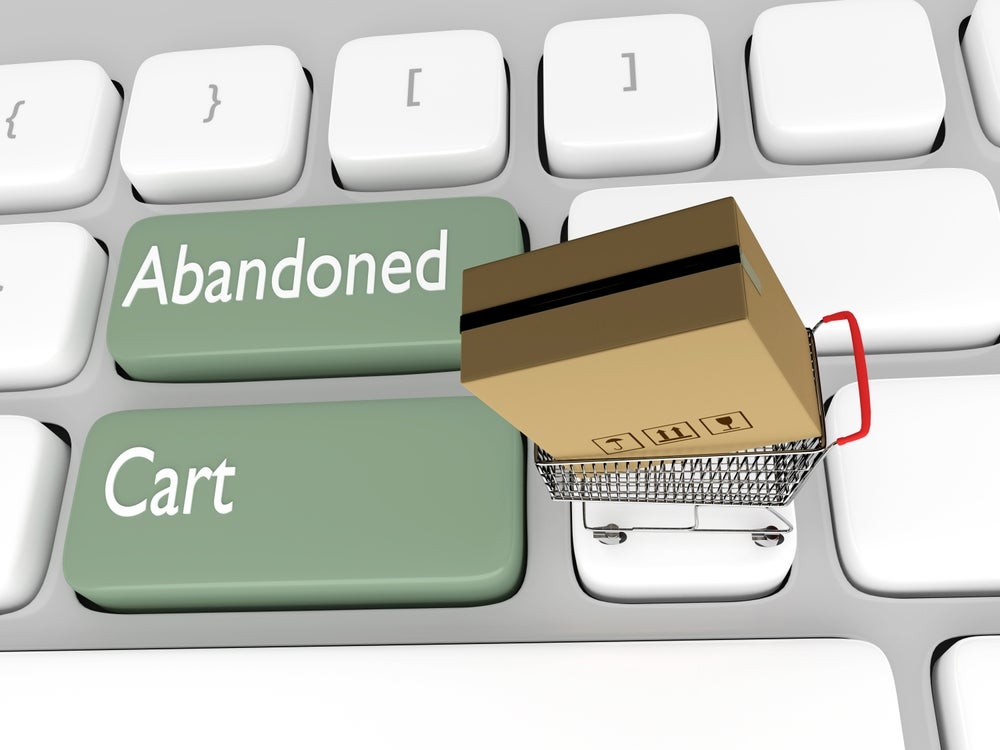
Seventy percent. That’s the staggering share of online shopping carts that never make it through checkout, according to new data from UX research group Baynard Institute – amounting to an estimated $270bn in lost sales every year. For merchants, these aren’t abstract statistics; they represent a persistent drain on ecommerce revenue and a clear signal that the industry must rethink how it approaches payments.
At the heart of this challenge lies what can only be described as the friction economy – a landscape where even tiny moments of hesitation during checkout can lead to fullblown abandonment. And merchants are feeling the consequences.
Where the checkout journey breaks down
Account creation fatigue
Customers increasingly reject the idea of mandatory signups. Their logic is straightforward: “I want to buy a product, not join another platform.”
Go deeper with GlobalData


Access deeper industry intelligence
Experience unmatched clarity with a single platform that combines unique data, AI, and human expertise.
This friction hits younger consumers particularly hard. Gen Z and millennials – threequarters of whom now consider digitalonly banks their primary financial institution – have been conditioned to expect seamless, instant and endtoend digital experiences. Any requirement that feels administrative or unnecessary becomes a blocker.
Security concerns
Today’s shoppers place speed and security on equal footing. But when a checkout flow feels unfamiliar, requests excessive information, or introduces surprise steps, trust erodes instantly. Customers expect robust compliance, fraud protection and data security – but they don’t want to wade through a complicated process to get it.
Overcomplex checkout flows
Every extra click represents a chance for customers to disappear. Baymard’s research suggests that simply optimising checkout design can reduce abandonment by up to 35% – a powerful reminder that simplicity is no longer optional; it’s a differentiator.
Why payments should be left to specialists
Today’s payment landscape is no longer something merchants – or even ecommerce platforms – can manage casually on the side. From navigating PCIDSS and PSD2, to deploying global routing, fraud detection, and dynamic currency conversion, payments have become an intricate, highly regulated ecosystem.
This is exactly where embedded payments move from being a convenience to a strategic asset.
By integrating payment capabilities directly into ecommerce platforms, embedded payment providers take on the heavy lifting – compliance, security, regulatory alignment, as well as provision of dynamic currency conversion and merchant cash advances to aid revenue growth – which frees platforms to focus on what they do best: delivering a smooth, intuitive user experience.
It’s a “bestinbreed” approach that lets each player specialise while collectively reducing friction and helping merchants keep more customers through checkout.
The rise – and importance – of vertical platforms
As ecommerce matures, onesizefitsall solutions are giving way to industry specific platforms across sectors like hospitality, wellness, B2B services, and medical services. These vertical platforms are designed to reflect the operational realities of each sector, making embedded payments an essential part of the workflow.
Take hospitality – a sector built on layers of transactions from room bookings to spa treatments to restaurants. Embedded payments streamline all these flows, turning what used to be a tangled operational expense into a strategic enabler of growth.
Across vertical industries, embedded payments support the nuanced needs that generic payment systems struggle with, such as:
- Staged payments
- Recurring or stored card billing
- Dynamic currency conversion
- Insurance and copay splits
- Tips, payouts, and multiparty settlements
These deeply integrated capabilities eliminate manual steps, reduce errors, enhance customer loyalty and ‘stickiness’ and create a more consistent customer experience.
The future Is integrated – and friction free
As vertical industries continue to steer the evolution of ecommerce, embedded payments will sit at the heart of the transformation. Platforms can deliver exceptional user experiences tailored to their sector’s needs, while payment providers ensure every transaction is compliant, secure, and seamless.
For merchants, the result is clear: fewer abandoned carts, stronger customer loyalty, and better protection of revenue that would otherwise slip through the cracks.
The companies that succeed will be those that recognise that payments are no longer a bolton – they are a strategic lever that shapes customer behaviour and drives business growth.
Hemlata Narasimhan, President, Elavon Europe & Global Head of Embedded Payments, Elavon