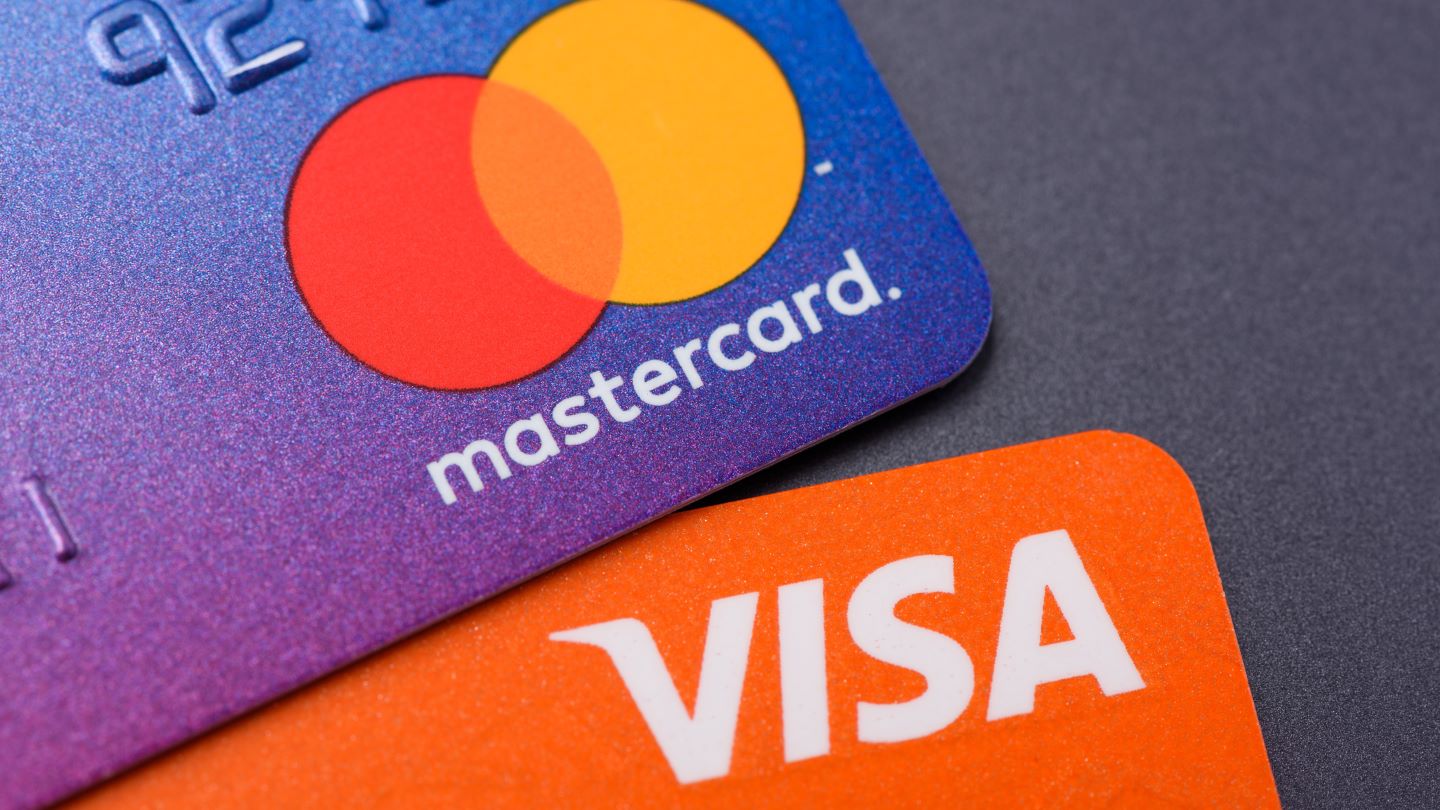
Europe needs to cut its reliance on US payment groups including Visa and Mastercard “urgently”, according to comments reported by the Financial Times from the head of a European banking consortium.
The remarks come as policymakers warn that the market dominance of US providers could be used as leverage if transatlantic relations were to worsen.

Access deeper industry intelligence
Experience unmatched clarity with a single platform that combines unique data, AI, and human expertise.
“We are highly dependent on international [payment] solutions,” said Martina Weimert, chief executive of the European Payments Initiative (EPI), which brings together 16 European banks and financial services companies.
“Yes, we have nice national assets like domestic [payment] card schemes . . . but we don’t have anything cross-border.
“If we say independence is so crucial and we all know it’s a timing issue . . . we need action urgently,’’ she said.
The European Central Bank has previously said Visa and Mastercard made up close to two-thirds of card transactions in the Eurozone in 2022.
The ECB also noted that 13 member states had no national alternative to the US networks, while existing domestic schemes were seeing falling usage.
As cash payments continue to decline, officials have stepped up warnings about the extent of Europe’s exposure to US payment companies and the risk that such influence could be exploited in the event of a serious political rupture.
The issue is being framed alongside other areas where officials argue the EU has become heavily reliant on American firms. Belgium’s cyber security chief recently said Europe had “lost the internet” due to the influence of large US technology groups.
“Deep integration created dependencies that could be abused when not all partners were allies,” warned Mario Draghi, former ECB president, in a recent speech. “Interdependence, once seen as a source of mutual restraint, became a source of leverage and control.”
EPI, whose members include BNP Paribas and Deutsche Bank, launched Wero in 2024 as a European alternative to Apple Pay.
The digital payments service now claims to have 48.5 million users across Belgium, France and Germany, and it plans to extend into online and physical retail payments by 2027.
Weimert said banks and merchants broadly had ‘’awareness” of the case for building a cross-border European payments network, adding that the “geopolitical context” had pushed the topic into the mainstream.
However, the ECB has pointed to the challenges of building scale through private initiatives, noting that previous attempts – including an earlier EPI effort to create a competing card scheme – “have shown the difficulty of scaling”.
A spokesperson attributed this to the way “actors involved struggle to align on common standards”.
In parallel, the ECB is advancing work on a digital euro, a public-sector project intended to enable digital payments across the Eurozone and bolster monetary sovereignty.
Piero Cipollone, the ECB executive board member overseeing the initiative, highlighted its rationale last week. “As European citizens, we want to avoid a situation where Europe is overly dependent on payment systems that are not in our hands,” he said.
The proposal remains politically contentious.
Some banks have opposed it, arguing it could weaken private-sector efforts, and a European parliament vote expected later this year is anticipated to be close.
Under current plans, merchants in the Eurozone would be required to accept digital euros in shops and online by 2029, when the ECB aims to begin issuing the instrument.
The infrastructure would also be designed to allow private-sector players to build services on top of it.