84 million credit cards issued in China in
2008…
CrediMax signs agreement in Bahrain…
Go deeper with GlobalData


Access deeper industry intelligence
Experience unmatched clarity with a single platform that combines unique data, AI, and human expertise.
Movistar Colombia launches m-banking for coffee
producers…
Barclays offers ‘Credit Shield Program’ in
Egypt…
Region Round-up
ASIA-PACIFIC
Contactless
cards
Combined bank and transit card
considered in Queensland
The Australian state of Queensland
is seeking partner banks to develop a combined contactless transit
and payments card. TransLink, the local transport authority, says
it wants to add new features to the contactless Go Card launched a
year ago, which covers buses, trains and ferries.
Speaking at the Cards & Payments
Australasia conference, Colin Hegarty, Go Card operations and
contracts manager at TransLink, says he is also looking at widening
the use of the technology to cover parking payments and event
access.
In addition, the authority is embarking on a
trial at Griffith University, adding the Go Card chip to student
cards. The card can also be used as an electronic purse for
low-value retail payments.
Mobile payments
Citi and Visa in m-payments
trial
Citi has teamed with Visa and mobile
operator M1 to launch a three-month contactless mobile payments
trial in Singapore. The pilot, to begin in May, will see up to 300
Citi M1 Platinum Visa cardholders given a Nokia 6212 classic
handset. Participants can make purchases of up to S$100 ($66) at
over 750 merchants by waving the near-field-communication
(NFC)-enabled mobile phones over a contactless reader at the point
of sale.
John Denhof, business director of credit
payment products at Citibank Singapore, said: “We believe there are
many opportunities for mobile payment services in Singapore, which
has one of the highest mobile phone penetration rates in the world.
However, we recognise the challenges of commercialisation and
scalability in the current environment. Thus, with this pilot, we
aim to gain greater insight into what drives mobile payment usage
and get feedback on the customer experience.”
Once the pilot is completed, the companies say
they will look at opportunities to further develop mobile payment
technology in line with the latest Infocomm Development Authority
(IDA) of Singapore’s plans for NFC services.
In February, authorities in Singapore outlined
plans to work with banks, telecom companies and payment processors
to set up an interoperable infrastructure for contactless mobile
transit and payments.
Card personalisation
ASB to offer Visa debit card
customisation
New Zealand bank ASB is offering
customers the ability to customise their Visa debit cards using
technology provided by card customisation specialist Serverside
Group. ASB is currently promoting the new card design service
across multiple channels, and says that large customer response
rates have confirmed market interest.
Cardholders can either customise their cards
with images and photos of their own, vetted by Serverside’s
in-house image checking facility, or can choose one from the image
library provided by ASB.
According to ASB, around 60 percent of
applicants have opted to use a personal image or photo, with family
members, pets and favourite places proving the most popular
designs. The rest have gone for the stock images provided by ASB.
Each personalised card costs NZ$10 ($5.81).
Card issuance
84 million credit cards issued
in China in 2008
The number of credit cards issued by
China’s big four commercial banks totalled 84 million at the end of
2008.
Industrial and Commercial Bank of China
(ICBC), Bank of China (BoC), China Construction Bank (CCB), and
Bank of Communications (BoComm) recently reported their 2008
financial results. ICBC issued 30.95 million credit cards, CCB
issued 18.71 million, BoC 15.79 million and BoComm 10 million,
representing a yearly rise of 67 percent, 48.4 percent, 38.6
percent and 70 percent respectively.
As of the end of 2008, CCB’s credit card loans
outstanding amounted to CNY23.29 billion ($3.40 billion), a rise of
128.9 percent compared to 2007. ICBC recorded a growth of 107.5
percent to total CNY8.24 billion, with BoComm posting a growth of
157 percent to reach CNY20.38 billion and BoC recording growth of
54.5 percent to reach CNY16.5 billion.
Co-branded cards
Singapore Airlines and ICICI
Bank launch platinum credit card
ICICI Bank, India’s largest private
sector bank, and Singapore Airlines have announced the launch of
the ICICI Bank Singapore Airlines Visa platinum credit card,
incorporating high-end travel and lifestyle-related benefits to
India’s international travellers.
Benefits include automatic enrolment for
Singapore Airlines’ KrisFlyer frequent flyer programme and
complementary membership of the Hilton Honors programme, along with
bonus miles, seasonal fare promotions, access to golf courses,
airport lounges and discounts at international duty-free shops.
POS deployment
POS terminals rolled out in Sri
Lanka
Sri Lankan telecom company Lanka
Bell is partnering with EPIC Lanka Technologies to introduce the
first wireless POS terminals in Sri Lanka. EPIC will be responsible
for the sale, software application development and equipment
maintenance, with Lanka Bell providing wireless telecom
connectivity.
The two companies hope to boost the usage of
payment cards in Sri Lanka through the use of wireless terminals,
which are easier to deploy than fixed-line terminals, especially in
the more remote parts of the country.
“The arrival of wireless POS machines will
mean a new dimension in convenience to merchants,” said Lanka Bell
managing director Prasad Samarasinghe. “Businesses can set up and
run a POS terminal much faster, and there is also the ability to
support field sales units with this new technology.”
Regulation
Taiwan’s credit card APR
reduced to 12.5%
The ceiling interest rate for
revolving credit cards in Taiwan is expected to drop to 12.5
percent per annum from the existing 20 percent following an
amendment to the country’s legislative civil code.
A consensus reached between the country’s
legislative and executive branches will mean that credit card APRs
will be calculated using the interest rate for accommodation
without collateral charged by the Central Bank of China (CBC), plus
a mark-up of 9 percentage points. As the CBC rate currently stands
at 3.5 percent per annum, the ceiling interest rate for revolving
credit will reach 12.5 percent accordingly.
Should the civil code amendment be passed
successfully, the new ceiling interest rate will take effect from
April, benefiting more than 3 million credit cardholders in Taiwan.
However, bank issuers are expecting to slash marketing costs in
response and review lending practices to offset the lower interest
income they will receive.
EUROPE, MIDDLE EAST,
AFRICA
Mobile
payments
Swiss m-payments working group
formed
Swiss telecom companies Orange
Switzerland, Sunrise and Swisscom have formed a working group to
promote and establish standards for mobile payments. The partners
want to promote near-field-communication (NFC) technology as the
standard for mobile payments and are now working together to
develop the necessary standards, processes and responsibilities for
the telecoms industry as well as a methodology for co-ordinating
with other sectors.
This will mean that, in the future, interested
companies will be able to offer their products and services to all
mobile phone users via a system that is simple to use and fast to
roll out, according to the partners.
The working group is open to all licensed
network operators and retailers of mobile phone services as well as
other businesses interested in m-payments development. The founders
say they aim to put together an overview of the current market and
user requirements over the course of the year before developing the
applicable standards.
The objective by the end of 2010 is to be able
to provide service models to banks, transportation companies and
trading firms to support their electronic services.
Debit cards
Visa and Emirates NBD partner
in the UAE
Visa and Emirates NBD, the largest
bank in the United Arab Emirates (UAE) in terms of assets, have
agreed to a long-term strategic partnership to expand the debit
market in the UAE. Visa will be working closely with the bank to
increase its debit portfolio, while at the same time helping to
extend its reach globally.
Kamran Siddiqi, Visa’s general manager for the
Middle East, said: “The signing of the Emirates NBD debit deal is
an important step for Visa in growing our debit card capabilities
in the UAE and bringing the associated debit card advantages to UAE
customers through Emirates NBD.”
Added-value services
Barclays offers ‘Credit Shield
Program’ in Egypt
Barclays Bank Egypt is to offer a
new ‘Credit Shield Program’ with partners Alico, a subsidiary of
insurance group AIG. The programme is for credit cardholders under
which the cardholder receives insurance coverage valued at his
total dues on the card against death or incapacity, as well as
chronic and dangerous diseases. The launch of the offering comes
shortly after the introduction of the Sehaty medical card, a
medical services discount card, at the beginning of the year.
This service is offered to credit card holders
aged 21 to 65 years old, and cardholders are only charged service
fees if the customer has an outstanding balance, with no flat fee
where the outstanding balance is zero.
Prepaid cards
White Eagle and hiten launch
prepaid card
Prepaid card provider White Eagle
and recent financial start-up hiten have announced the launch of
the hiten prepaid MasterCard in the UK.
The hiten card provides chip and PIN
security as well as giving customers the ability to retrieve their
PIN over an interactive voice recognition (IVR) solution, activate
their card, check their balance, and lock and unlock their card any
time via their mobile phones using SMS.
Warren Hardy, chairman of White Eagle, said:
“The hiten prepaid MasterCard is targeted at the family market in
the UK which allows the consumer the convenience of receiving wage
payments as well as a way to share money between other members of
their family unit. White Eagle is very excited about this versatile
product and look forward to the success of this programme.”
Self-service terminals
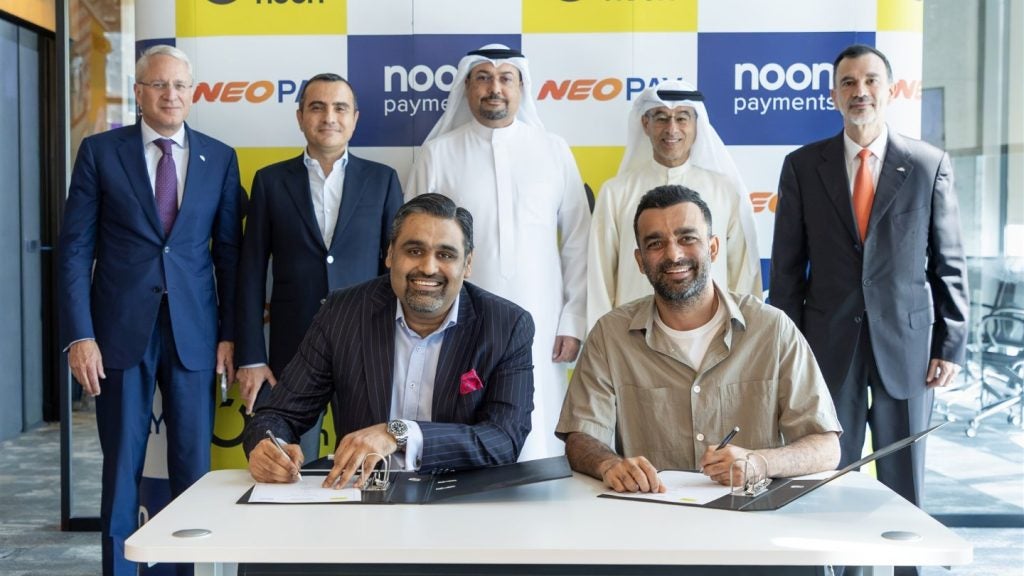
CrediMax signs agreement in
Bahrain
Bahrain’s online government
programme, the eGovernment Authority (eGA), recently signed an
agreement with CrediMax, the Kingdom’s leading credit card issuer
and acquirer, to finance the eKiosks project across the Kingdom of
Bahrain.
The eKiosks are fixed electronic self-service
devices similar to ATM machines, where users can access the
eGovernment services currently available on the eGovernment portal.
The 35 eKiosks will be distributed in various locations throughout
the Kingdom which have been selected beforehand to enable the
public to carry out their transactions from anywhere. The eKiosks
comprise one of the main channels through which government
e-services will be available to the general public.
Prepaid cards
APS partners Posta Româna on
prepaid card
Posta Româna, the Romanian postal
service, and UK prepaid payment solution provider Advanced Payment
Solutions (APS) have partnered to launch Romania’s first-ever
general-purpose prepaid payment card.
The launch of the Posta Româna cashplus
prepaid MasterCard opens up a new market in a country where a
significant number of its 21 million people do not have a bank
account or credit card and most payments are made in cash. Any
Romanian aged over 18 years, resident in Romania and owning an
identity card will be eligible to open an account.
The card will be offered initially to Posta
Româna staff ahead of the consumer launch in six Posta Româna
branches in Bucharest in the second quarter of 2009. The card will
be rolled out to all of Posta Româna’s 7,000 branches in due
course.
Marius Vatafu, CEO Posta Româna, said: “Posta
Româna will provide nationwide coverage to this partnership; due to
this Posta Româna customers will benefit from a greater flexibility
to manage their finances. cashplus prepaid card will not only be
accepted in Posta Româna branches, but also in retail stores,
online shops and the ATM network worldwide; wherever the MasterCard
sign is displayed.”
E-money
E-money reforms pave the way
for new competitors in EU
The Committee of Permanent
Representatives in the European Union (COREPER), an advisory group
to the Council of the European Union, has released a proposal to
lower barriers into the European e-money markets.
COREPER’s proposal outlines a reduction in the
regulatory burden placed on e-money institutions as well as
provisions on payment institutions under the Payment Services
Directive. The capital requirements for e-money issuers have also
been scaled back, from the current EUR1 million ($1.32 million) to
EUR350,000.
The Commission’s official statement says the
aim of the Directive is: “To remove the high regulatory barriers
preventing the development of an electronic money market in the
European Union and to set reasonable conditions for the business
operations of electronic money institutions”
Also mentioned is the possibility of “hybrid
electronic money institutions”, that perform other activities in
addition to issuing electronic money. The aim of this particular
clause will be to encourage the use of mobile payments providers
within the EU.
LATIN
AMERICA
Mergers and
acquisitions
Citigroup sells 87% of Redecard
stake
US banking giant Citigroup has sold
the majority of its stake in one of Brazil’s largest merchant
acquirers and payment processors, Redecard. The ailing
trans-national bank sold about 87 percent of its stake in Redecard
to foreign investors, according to a recent filing by the Sao
Paolo-based card company. Citigroup originally had a 17 percent
stake in the processor.
While Banco Itaú Holding, the recently merged
bank that is now Latin America’s largest, increased its stake in
Redecard to 50 percent from 46.4 percent, it was investment funds
that appeared to be the second largest purchasers of Redecard
shares after foreign investors.
The sale realised approximately BRL2.8 billion
($1.25 billion) for Citigroup as investment funds bought 8 percent
of the 90.3 million shares and retail investors bought about 3.8
percent.
Mobile payments
Colombia m-banking hits 9m
subscribers
Mobile banking subscribers in
Colombia total above 9 million, with numbers increasing by around
11,000 subscribers a month, according to a report by Colombian
association Asobancaria.
Since m-banking has been launched, each user
made an average of eight mobile banking transactions per month.
Colombian subscribers are able to use their mobile phones to
consult their bank account balances, make money transfers, pay
bills and top up prepaid mobile phone accounts. Subscribers have
access to bank accounts at local banks Bancolombia, Banco AV
Villas, Davivienda, Bbva, Banco Caja Social and Colmena.
Around 960,000 m-banking transactions were
conducted by Colombian subscribers in December 2008 alone, with the
most common m-banking transactions being top-ups and account
balance inquiries. Mobile operators Comcel, Movistar and Tigo
currently provide m-banking services as part of their value-added
services portfolios.
Mobile payments
Oi expands mobile credit card
service
Brazil’s largest telecom operator Oi
has expanded its credit card service to 21 new towns to capitalise
on a gap in the market left by conventional credit cards. The Oi
Paggo credit card is available to merchants free of charge during
the campaign for the expansion of the acceptance network.
Transactions on the Oi credit card are made by
sending SMS via mobile handsets, which Oi claims is cheaper than
the market average, adding that subscribers don’t pay annual fees
for subscription to the service. A BRL2.99 ($1.37) fee is paid for
bill issuance each month when the card is used.
The expansion of the service follows Oi’s
partnership with payment processing company Braspag to develop
mobile payment services in Latin America. Oi has already partnered
with airline company Gol Linhas Aereas to allow users to book
airline tickets over their mobile phones.
Mobile payments
Movistar Colombia launches
m-banking for coffee producers
Colombia’s second largest bank,
Banco de Bogota, and mobile operator Telefonica Movistar Colombia
have teamed up with the federation of Colombian Coffee Growers to
launch an m-banking product.
The service is expected to reach 300,000
coffee growers across the country, where growers can use their
mobile phones to make payments, deposit money and withdraw money
from shops as well as being able to check coffee prices, bank
balances and recent transactions. During the first month of the
programme, the coffee growers in the municipalities of San Gil, Rio
Sucio, Socorro and Quinchia made more than 1,300 SMS transactions
on their mobile phones.
A study by Interamerican Development Bank and
Foundation Telefonica has said that in recent years, mobile
communications have moved into some of the remotest areas of Latin
America and the Caribbean. These services still have a long way to
go before reaching the popularity levels they have seen in similar
locations in Africa and Asia. In 2008, 80 percent of Latin
Americans had a mobile phone, of which 30 percent had access to
basic financial services.
Economy
Brazilian GDP could deflate for
first time in almost 20 years
The Central Bank of Brazil has
recently released a survey stating the country’s GDP may shrink for
the first time in 17 years.
The survey, made up of the median estimates of
around 100 economists, has said the $1.5 trillion economy could
shrink by 0.19 percent this year. The results coincide with reports
from banks such as Morgan Stanley, Deutsche Bank and BNP Paribas
which also forecast that Latin America’s largest economy will
shrink this year.
Morgan Stanley said in a 16 March research
report that Brazil’s GDP is looking like it will shrink 4.5 percent
in 2009. BNP Paribas forecast it would shrink 1.5 percent this
year, while Deutsche Bank estimated a 1 percent contraction.
The central bank on 30 March indicated that
rising domestic income coupled with lower interest rates could
spark a boom before the year is over. “Recent results show a
relative recovery, in the margin of the Brazilian economy,” the
bank said in a statement.
News of a prospective contraction follows
closely on the heels of a 11 March announcement by the central bank
that it was going cut the overnight rate by 1.5 percentage points,
the biggest reduction in five years, to 11.25 percent, matching the
record low in place from September 2007 until April 2008.
Bank lending
Bank lending growth in Mexico
slows in February
Credit lending to consumers in
Mexico, including credit cards, was down 37.5 percent compared to
last year, according to the country’s central bank.
The drop was due in a large part to the
Mexican Citigroup subsidiary Banamex, which transferred its credit
card loans to a non-bank subsidiary last March. Mexico’s banks are
generally regarded to have avoided the worst of the subprime crisis
as they remain well capitalised. Despite this, according to the
National Banking and Securities Commission, non-performing credit
card loans as a percentage of total credit card loans climbed to
10.2 percent at the end of February from 9.37 percent in
December.
Credit card loans at the end of February were
MXN139.9 billion ($10.48 billion), a drop from MXN152.8 billion at
the end of the previous month. Mexico has also announced it is to
take advantage of US credit lines as it approached the
International Monetary Fund for a $47 billion loan, as its banks
tighten lending practices, with some organisations such as Banorte
and HSBC Mexico also offering restructuring programmes to heavily
indebted consumers amid a spike in bad loans.
NORTH AMERICA
Alternative
payments
Revolution Money raises
$42m
Revolution Money, a US online
interchange-free payments platform launched in 2007, has raised $42
million in funding from a group including a Goldman Sachs affiliate
and existing investors Citi and Morgan Stanley.
Revolution Money, a subsidiary of Revolution,
an investment firm formed by AOL founder Steve Case, has set itself
up as a direct competitor to Visa and MasterCard by offering an
online credit card and money exchange platform.
According to the company, the new funding will
be used to improve technology and promote its credit card among
retailers. The card is already accepted at around 650,000 US
locations, with plans to expand to three million by 2011.
Security and fraud
AFP finds payment fraud
rampant
According to the recently released
2009 Association for Financial Professionals (AFP) Payments and
Fraud Control Survey, the level and type of payments fraud
experienced by US organisations has increased since 2007.
The survey, which was sponsored by JPMorgan
Treasury Services, found that around 30 percent of survey
respondents reported that incidents of fraud increased in 2008
compared to 2007. Further, nearly 40 percent of organisations
experienced increased fraud activity during the second half of 2008
as economic conditions worsened in the US.
The survey also revealed that around 91
percent of the companies that experienced attempted or actual
payments fraud in 2008 were victims of cheque fraud. The percentage
of organisations affected by payments fraud via other payment
methods were: 28 percent via automated clearing house (ACH) debit,
18 percent from consumer credit and debit cards, 14 percent by
corporate and commercial cards, seven percent from ACH credits and
six percent by wire transfers.
Payment processing
Fifth Third Bancorp, Advent
International partner for processing
Private equity firm Advent
International has announced it is to acquire a majority holding in
the processing business of Fifth Third Bancorp, one of the largest
banks in the US.
The two companies have declared they are
entering into a definitive agreement whereby Advent International
will take a 51 percent stake in Fifth Third’s processing business
through the establishment of a joint venture that values the new
company at approximately $2.35 billion before valuation adjustments
by either party. Fifth Third will retain the remaining 49 percent
interest in the new company, Fifth Third Processing Solutions.
Mobile payments
Central National Bank and
Denarii Payments launch SizzleMoney
Oklahoma-based Central National Bank
of Enid has joined with payment processor Denarii Payments to
launch a new mobile payment platform, SizzleMoney. SizzleMoney is a
mobile phone and prepaid card product that allows access to money,
payment services and payroll distribution through an SMS-based
service. SizzleMoney is the first mobile transaction product to
focus on community money sharing. The platform, launched by Denarii
and issued by the Central Bank of Enid, also has remittance
functionality.
According to Donald Baggett, founder and CEO
of Denarii Payments, SizzleMoney is geared towards first-generation
immigrants new to the US. These individuals, he said, share with
and support family members abroad.
To facilitate that growth, SizzleMoney will
utilise iSizzle representatives that Baggett describes as
neighbourhood-based young adults, mostly students. They will
purchase SizzleMoney kits at a wholesale price and sell them in
their neighbourhood or on college campuses.
Prepaid cards
New underbanked and prepaid
card usage data
Not-for-profit prepaid card
organisations, the Network Branded Prepaid Card Association and the
Centre for Financial Services Innovation have released a survey
highlighting the demand for reloadable prepaid cards in the US.
According to the survey, around 96 percent of
prepaid card users said the cards were useful and 94 percent would
recommend a reloadable prepaid card to someone else.
The survey also reported that 84 percent of
those questioned cited protection of funds if the card is lost or
stolen as a major benefit, while 80 percent said the social and
practical benefits of having a plastic card were crucial to them
and 77 percent said that security related to carrying less cash was
a major factor.
Mobile banking
NYCE launches SMS balance
enquiries
US payments network NYCE, part of US
payment processor Metavante, has partnered mobile banking outfit
Monitise to offer its bank and credit union participants the option
of providing customers with SMS balance enquiries.
The free SMS transactions will be
offered as a standard feature of full participation in the NYCE
Network, which has over 480 financial institution members in the
US.
Powered by Monitise Americas, the new offering
will serve as an extension of the balance inquiry functionality
already offered at ATMs by NYCE.
Consumers will be able to request and receive
real-time balance information on their primary accounts via SMS.
NYCE cites a recent survey commissioned by Monitise Americas which
found that more than 75 percent of respondents consider it
important to have real-time account information.
Card fees and pricing